Users spend a huge portion of their time online—indeed, every internet user can now be considered a potential customer. Brands compete for consumer attention in dozens of places simultaneously, using various advertising channels.
Not all forms of online advertising are created equal, however – they differ in cost, effectiveness, target audience, and method of operation. Let's take a look at the most popular types of online advertising and the real differences between them.
The most popular advertising channels and formats on the Internet
Online advertising has evolved from simple graphic banners to advanced campaigns in search engines, social media and other channels, allowing you to precisely reach specific audiences.
Despite hundreds of solutions, online advertising most often means one of the following options :
(The rest of the article can be found below the form)
Advertising in Google Ads
For a vast majority of businesses, this is the absolute foundation of online marketing. It operates based on keyword bidding, allowing brands to display ads to users precisely when they're searching for the product or service they're offering. The most important formats include search engine campaigns, display network campaigns, video campaigns ( YouTube Ads ), and Performance Max.
The advantages of Google Ads include precise targeting and rapid results. Campaigns can be scaled and optimized in near real-time, and results are easily measurable. The disadvantages include rising costs per click, especially in competitive industries, and the need for regular optimization to maintain profitability.

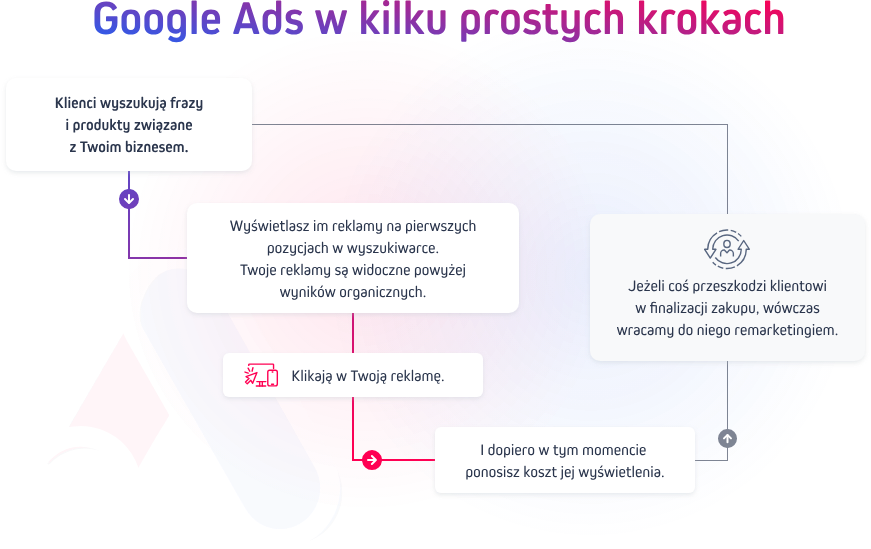
Figure 1. Explanation of what Google Ads advertising is.
Google Ads can appear in many different places within and outside the Google ecosystem – below is a list of possible locations.
Search Network
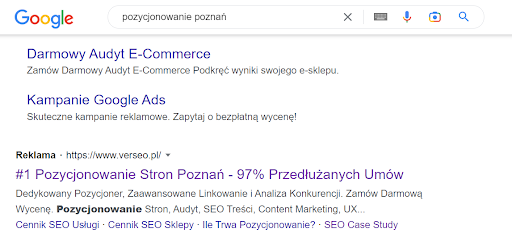
Google search results page (above organic results, below them, sometimes in the form of a product carousel for Shopping ads).
Figure 2. Where are Google Ads ads displayed on the Search Network?
Google Display Network
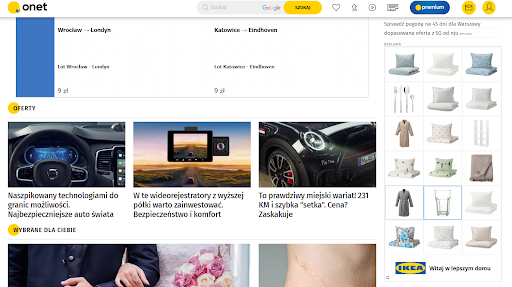
- Websites belonging to the Google partner network (portals, blogs, thematic websites).
- Google services such as YouTube (as banners, cards, overlays), Gmail ("Offers", "Community" cards), Blogger, other Google web services.
- Mobile applications using AdMob and mobile versions of websites on the Display Network.
Figure 3. Where are creatives displayed in the Google Display Network (GDN)?
YouTube
- Before the movie (In-Stream, skippable and non-skippable).
- During or after the movie (In-Stream).
- In YouTube search results (sponsored video).
- On the home page or in featured content (e.g. Discovery/Video Discovery).
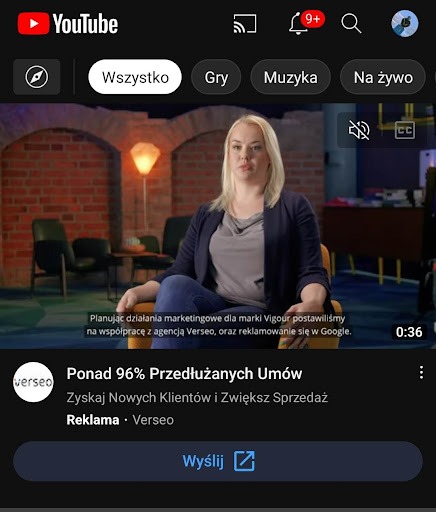
Figure 4. Where are sample ads displayed on YouTube?
Gmail and Discover
Gmail cards (e.g., "Offers") as expandable email-style ads.
Discover tabs on Android mobile devices (feed with recommended content where display/Discovery ads may appear).
Google Maps and local formats
Google Maps (marked sponsored listings, "advertised" locations).
Local results in search engine (Local Pack above regular results, with advertising marking).
Additionally, there is the Google Play store and applications.
Meta Ads, i.e. advertising on Facebook and Instagram
Online advertising is often associated with social media, and Meta Ads is still a leader in this category.
Facebook and Instagram's advertising system is based on demographic data, interests, and, above all, user behavior. It works perfectly in image-building and remarketing campaigns, where emotional messaging and compelling visuals are key.
The reach and personalization of ads are huge advantages. However, Meta's algorithms are demanding – imprecise audiences or poor graphics can lead to budget burn. Therefore, this requires experience in segmentation and results analysis.
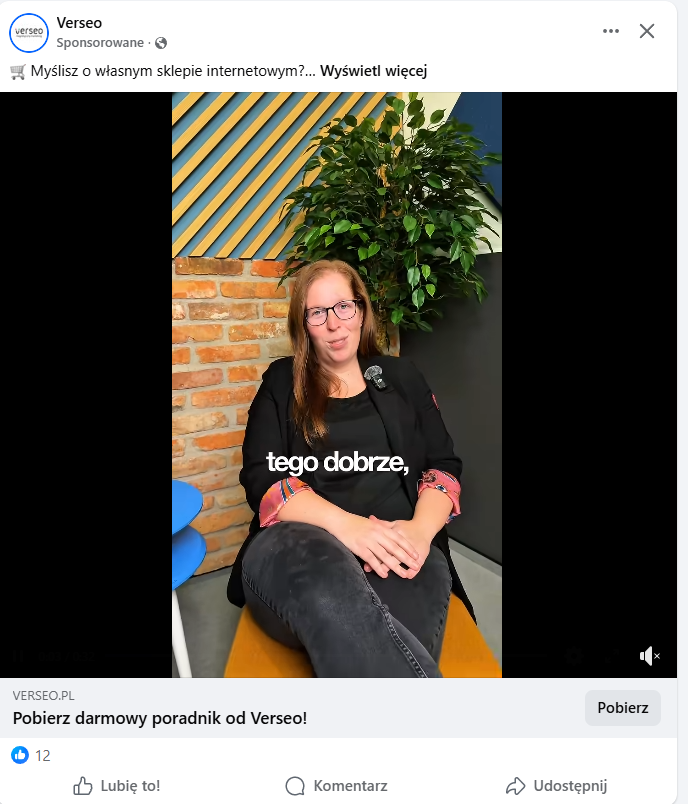
Figure 5. Example of a Meta Ads ad – video format.
Bing Ads – an alternative to Google
Although Bing's share in the search engine market in Poland is small, in selected cases Bing Ads can be a sensible complement to Google campaigns.
Microsoft's search engine users are primarily office workers, where Edge and Bing are typically used by default. This means that office workers and users of corporate devices are relatively more likely to use this channel, which can be particularly interesting in B2B and specialized services industries.
The advantage of Bing Ads is lower competition and, as a result, lower cost per click with well-chosen keywords.
The downside is its limited reach, which means that in most strategies, Bing advertising should be treated as a supplement to Google Ads , not a replacement. In practice, this channel makes sense mainly when you already have a well-organized Google campaign and are looking for additional, relatively inexpensive sources of search engine traffic.
LinkedIn Ads for B2B marketing
When it comes to online marketing for businesses, LinkedIn Ads is unmatched. It's the best platform for reaching decision-makers, specialists, and executives. Ads can be targeted based on industry, job title, company size, or the user's (declared) skills.
While the effectiveness of contacts is high, the cost per click is among the highest in the entire online advertising ecosystem. Therefore, LinkedIn Ads is best suited for lead generation campaigns with high conversion rates or employer branding activities.
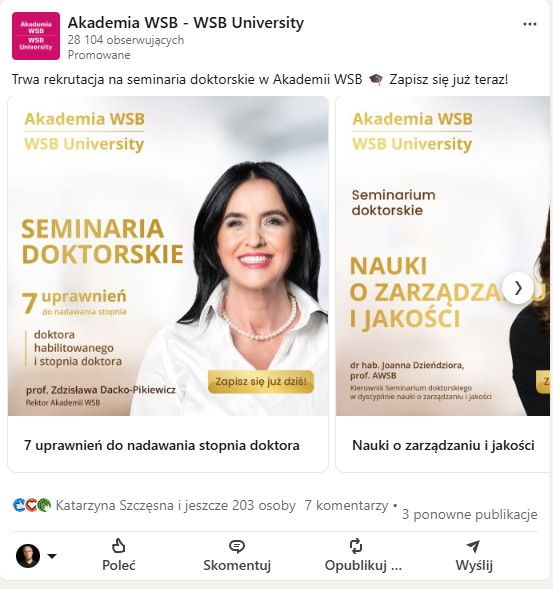
Figure 6. Example of a LinkedIn Ads ad.
TikTok Ads – the power of creativity and emotions
It's fair to say that TikTok Ads has changed the game in recent years . It's no longer just a channel designed exclusively for younger audiences. The platform's algorithm allows ads to organically reach a huge audience, provided the format is well-suited to TikTok's style: short, dynamic videos.
The most effective forms of online advertising in this channel include In-Feed Ads, Spark Ads (promoting organic videos), and AR campaigns. The latter are particularly interesting – an advertising format in which a brand uses Augmented Reality (AR) to allow users to "interact" with a product through their phone's camera.
In practice, it works like this: you create a filter/effect that the user can "put on" themselves (e.g., makeup, glasses, a hat, jewelry) or place a product in their environment (e.g., a piece of furniture in a room, a car in the driveway).
The advantages of advertising on TikTok? Massive user engagement and still relatively low cost of reaching your audience. The disadvantages? The difficulty of maintaining a professional image in an entertainment-oriented environment.
Programmatic – automation in the service of efficiency
Programmatic is the most advanced form of online advertising. It leverages algorithms, user data, and auction systems to automatically purchase advertising space in real time. This allows marketers to precisely reach specific audience segments across multiple channels simultaneously.
The most important places to display ads in programmatic are :
- websites of large portals and thematic websites (media, news, lifestyle, automotive, sports, finance, etc.).
- thousands of smaller niche websites, blogs, forums – depending on targeting and available exchanges.
- mobile applications (Android, iOS) using advertising networks connected to the programmatic ecosystem.
- online video: from players on large portals, through VOD services, to in-stream and out-stream in various media.
- native ads embedded in the content of articles or content feeds.
- online audio (internet radio, podcasts) – increasingly also purchased programmatically.
- digital out-of-home (screens in shopping malls, at stations, in the city) – increasingly available through the same platforms.
In practice, programmatic is not a "single place of broadcasting", but a way of buying space: instead of dealing with a single portal, you buy views on many websites, applications and formats from a single panel, filtering it all by user data.
This solution is ideal for large brands and multi-format campaigns. Programmatic provides scale and cost optimization, although it requires expertise, access to data, and collaboration with external DSPs.
SEO / GEO – advertising without advertising
Website positioning (SEO) is a form of internet marketing that differs from traditional advertising. You don't pay for individual clicks; you invest in organic visibility in search results.
A well-optimized website gains consistent traffic from Google and LLM models, which translates into an increasing number of inquiries, leads, and sales over time without the need for constant advertising budget boosts. This is why SEO can be the foundation of a long-term online presence strategy, especially in industries where users intensively search for information before making a purchase.
Effective SEO consists of three key areas:
- technical condition of the website (loading speed, indexation, structure),
- content tailored to user intentions (blog, category descriptions, guides)
- and links leading to the website from other valuable websites.
Working on these elements takes time, but the results are cumulative – the longer you invest in SEO, the more traffic you can generate with relatively constant maintenance costs. Unlike paid campaigns, which cease to function immediately after being disabled, well-built SEO can deliver valuable traffic long after the activities are completed.
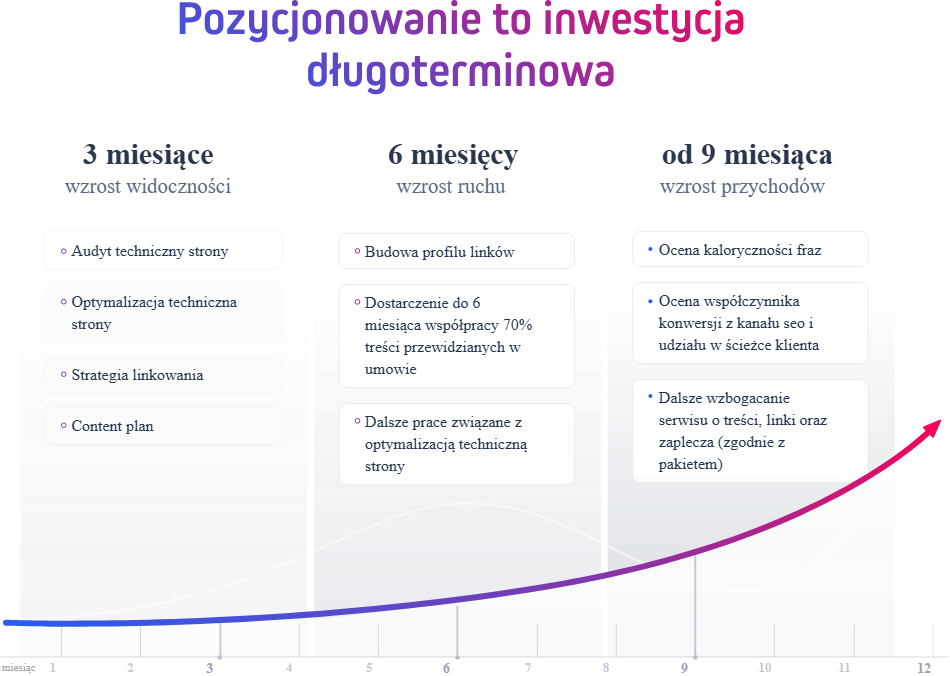
Figure 7. A graph showing when the effects of website positioning are usually visible.
Which online advertising should you choose?
Contact a Verseo specialist and let's discuss your business. Our consultant will analyze your company profile and suggest the most effective online marketing channels.
Frequently asked questions about online advertising
The most popular channels are search engine systems and advertising networks (e.g., Google Ads, Microsoft/Bing Ads), social media campaigns (Meta/Facebook Ads, TikTok Ads, LinkedIn, Pinterest), automated ad buying systems (Programmatic), and organic search engine positioning (SEO).
The key difference lies in the way customers are reached. Google Ads is intent-based – the ad responds to a specific query (keyword) that the user enters into the search engine. Social media ads (e.g., Meta Ads, TikTok) are based on audience interests and behaviors, building brand awareness and creating a purchasing need before the customer even starts searching for the product.
The main advantage is the exceptional targeting precision and rapid impact. Ads reach users precisely when they are searching for a given service or product. Results are easily measurable, and campaigns (e.g., Search, Shopping, Performance Max) can be optimized and scaled in near real time.
This advertising format (PLA – Product Listing Ads) was created with e-commerce in mind. The ad displays a product image, its price, and the store name, effectively attracting the attention of customers ready to finalize their purchase.
LinkedIn Ads is excellent for generating business leads. It allows you to precisely reach decision-makers based on their job title, industry, or company size. Google Ads search advertising, which targets narrow, industry-specific keywords, also provides excellent support for B2B.
There's no single, universal answer, and these two channels complement each other best. Paid advertising (PPC) delivers immediate results and rapid traffic from the moment the campaign launches. SEO requires time and regular work (content, optimization, links), but in the long term, it builds stable and often less expensive search engine visibility.
Video ads are primarily used to engage audiences and build brand awareness. The most popular platforms for displaying them are currently YouTube (e.g., TrueView formats, Bumper Ads), TikTok (In-Feed ads), and Meta Ads (Reels, Stories). They require capturing the viewer's attention within the first few seconds of the ad.
Summary
The above article covers the following topics:
- Modern online marketing offers a wide range of tools – from targeted search engine and social media campaigns to long-term SEO activities – which vary in cost, reach, and method of reaching potential customers.
- Choosing the right ad depends on your industry, budget, and goals, so it's worth consulting with a Verseo specialist who will prepare a strategy tailored to your business.