

Contents
You are now reading:
Targeting in GDN – from demographics to placements – how to optimize display?
Close
Display advertising has exceptional customer acquisition potential. It's worth learning more about Display Network advertising and its targeting options.
What is an advertising network?
The advertising network comprises over two million websites, applications, and videos that can display Google AdWords image and text ads . It reaches over 90% of internet users worldwide, and in Poland, over 96% on computers and over 82% on mobile devices.
Thanks to the fact that publishers provide their advertising space, we can display static and dynamic ads in many formats.
The Display Network allows for very precise targeting to show ads in a specific context (e.g., "learning foreign languages"), to specific audiences (e.g., "outdoor enthusiasts" or "racing and luxury car enthusiasts"), or in specific locations.
(The rest of the article can be found below the form)
Fill out the form and schedule a call with an expert
We'll get to know your business and prepare a personalized quote for the optimal marketing mix. Completely free.
The controller of your personal data is Verseo, a limited liability company with its registered office in Poznań, at ul. Węglowa 1/3.
About Verseo
The Company's registered office is located in Poznań. The Company is entered in the Register of Entrepreneurs maintained by the District Court for Poznań – Nowe Miasto and Wilda in Poznań, 8th Commercial Division of the National Court Register, under KRS number: 0000910174, Tax Identification Number (NIP): 7773257986. You can contact us by mail at the address provided above or by email at: ochronadanych@verseo.pl
You have the right to:
- access to your data,
- rectification of your data,
- request deletion of data,
- processing restrictions,
- object to the processing of personal data,
- transfer of personal data,
- withdrawal of consent.
If you believe that we are processing your data contrary to legal requirements, you have the right to lodge a complaint with the supervisory authority – the President of the Personal Data Protection Office.
We process your data for the purpose of:
- handling your inquiry, pursuant to Article 6(1)(b) of the General Data Protection Regulation (GDPR);
- marketing purposes consisting in the promotion of our goods and services and ourselves in connection with the consent you have granted, pursuant to Article 6(1)(a) of the GDPR;
- securing or pursuing possible claims in connection with our legitimate interest, pursuant to Article 6(1)(f) of the GDPR.
Providing your data is voluntary . However, without it, you will not be able to send us a message, and we will not be able to respond to you.
We may transfer your data to trusted recipients:
- providers of tools for: website traffic analysis, sending marketing information.
- entities responsible for hosting (storing) the website and personal data.
We will process your data for the period of:
- necessary to achieve the specific purpose for which they were collected, and after its expiry for the period necessary to secure or pursue any claims
- in the case of data processing based on consent until its withdrawal. Withdrawal of consent does not affect the lawfulness of processing prior to withdrawal.
We do not process personal data in a way that would involve making solely automated decisions about you. More information regarding the processing of personal data can be found in our Privacy Policy.
How can I target ads on the Display Network?
Contextual targeting
Contextual targeting involves Google automatically adjusting placements in the advertising network based on keywords or website topics you select. Based on this information, Google analyzes the content of websites and allows us to tailor our ads to them.
Keyword targeting
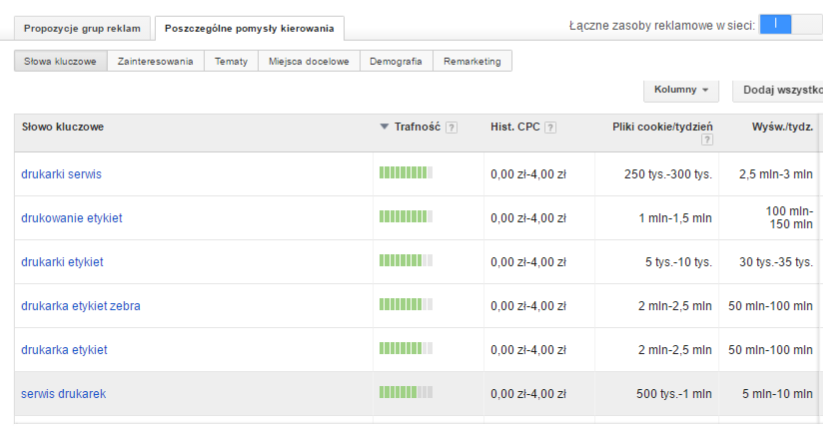
Keyword targeting is part of contextual targeting. By selecting specific keywords, such as "vacation in Spain," our ads can be displayed on various websites containing those words.
Topic Targeting
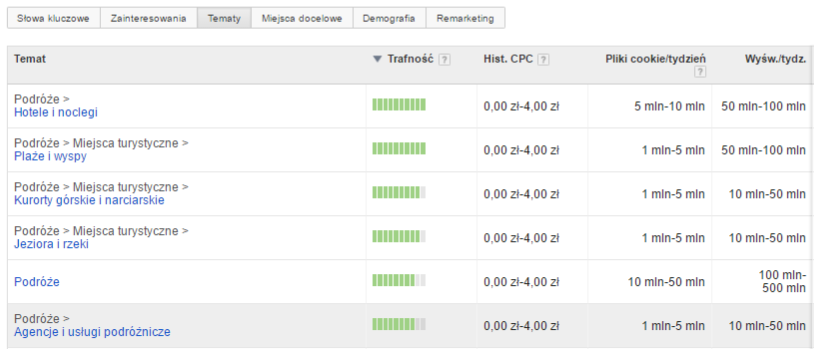
It involves targeting ads to multiple websites with specific themes. This type of targeting allows you to reach a very wide range of websites on the Display Network and, as a result, present ads related to the products or services companies offer.
Language and location targeting
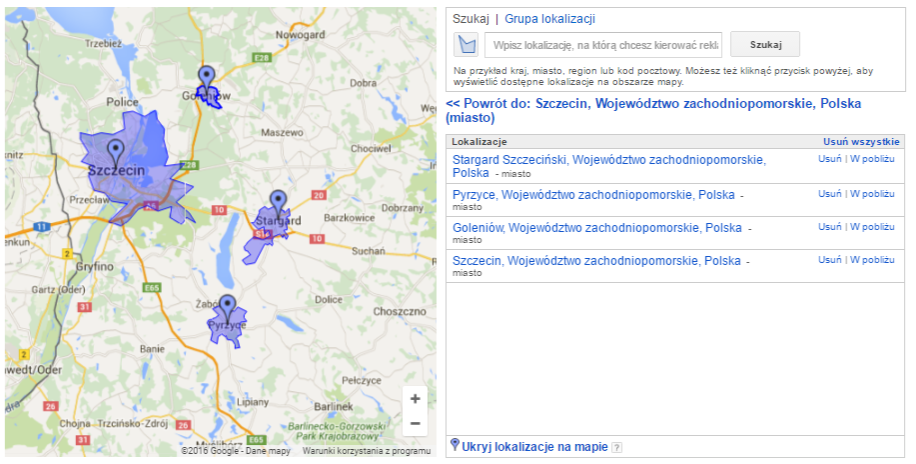
It allows you to select the appropriate language and location, e.g. country, province or city, where you want to display ads.
Placement targeting
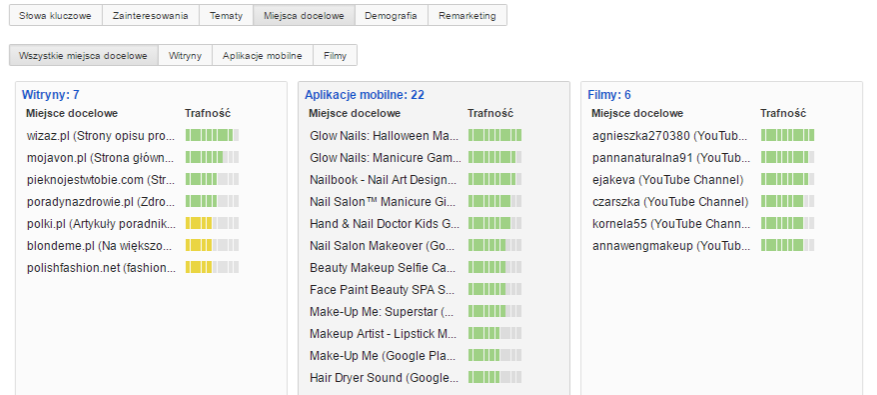
In this case, unlike contextual targeting, we can choose specific targets in the form of websites , blogs, videos, applications and present image or text ads there.
Audience targeting
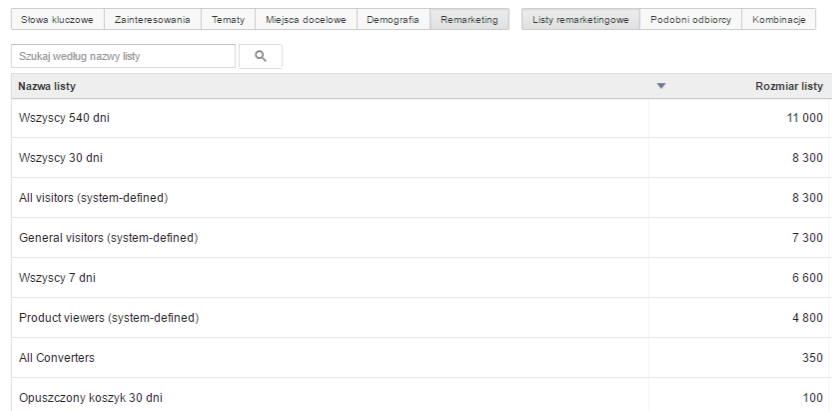
This type of targeting allows us to display ads to selected audiences who visit websites on the Display Network . This allows us to reach users who have previously visited a given website by creating a remarketing campaign. Remarketing is displayed based on pre-defined audience lists. A cookie is saved on the devices of users who have visited our website, allowing for the retention of identified user data for up to 540 days.
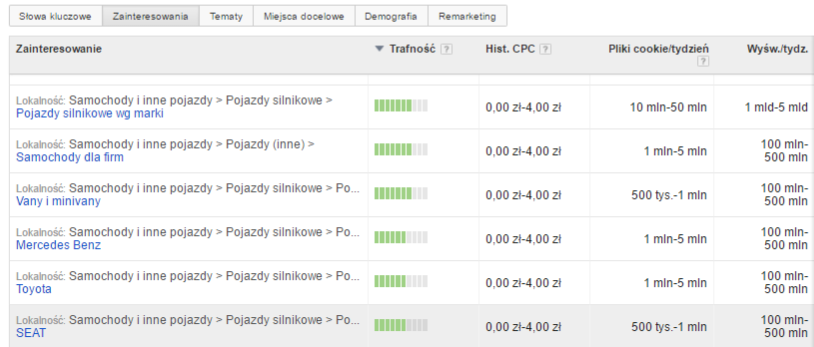
You can also select audiences with similar interests to reach more potential customers.
Advertising may be displayed to affinity audiences, in-market audiences, similar audiences, or based on other interests.
Demographic Targeting
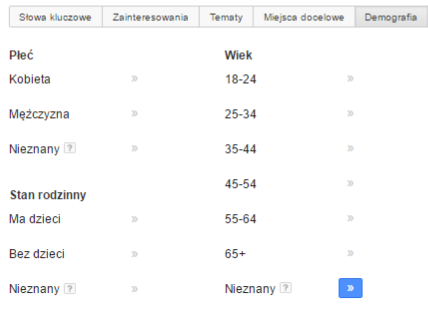
Demographic targeting allows you to target ads by gender, age group, or family status. Google determines demographic data based on website visitor history and assigns it to a specific browser. Google also uses demographic data provided by internet users, for example, on social media.
Device targeting
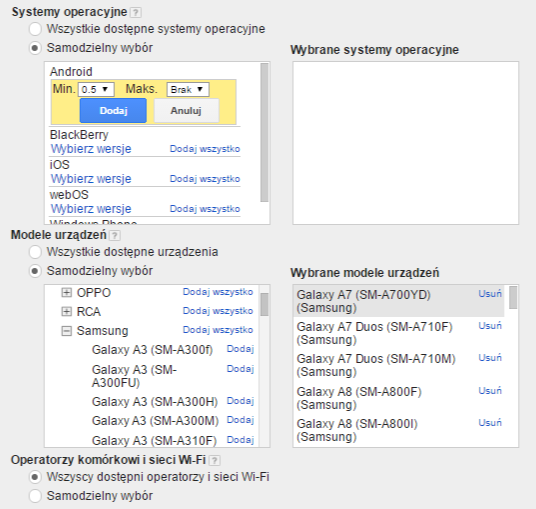
This method allows us to display ads to people who visit ad network websites using only smartphones, only computers, or only Android or iOS devices. Interestingly, we can even select specific operating system versions or device models.
Combining targeting methods
A very common practice that allows for the most precise ad targeting is combining targeting methods. The goal of combining different types of targeting methods is to show the right groups of users in the right places and at the right times.
You might like it
- Display advertising – formats, advantages and when to include it in your strategy
- YouTube Targeting – Comparing Targeting Options for Video Campaigns
- Remarketing – how to re-engage with people who have already visited your website
- Search Network vs. Display Network – What's the Difference and When to Choose Which One?
Ad targeting application example
If you run a hair salon in Szczecin, you can display image and text ads to women aged 25-34 or 35-44, exclusively in Szczecin and within a 10km radius around the city, for example, on blogs and forums related to stylist advice, fashion, and hairstyles. This will allow you to reach your potential customers very accurately and significantly increase your chances of acquiring them.
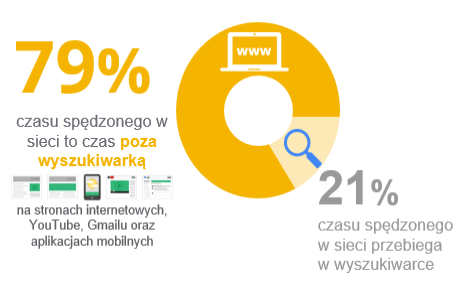
Why is it worth using an advertising network?
Summary
The above article covers the following topics:
- The Google Display Network is a system spanning millions of websites and applications that, through precise targeting, allows you to reach the vast majority of internet users with a variety of ad formats.
- Display Network ads can be targeted based on page content (context, keywords, topics), location and language, specific websites (placements), and user characteristics such as demographics, interests, behavior (remarketing), and devices used.