Services Marketing – What It Is and Which Channels to Choose
A service is an activity or intangible benefit that one party can offer to another. Examples include banks, clinics, and hairdressers. The basic characteristics of services include, in addition to intangibility, perishability (inability to store or preserve), diversity, and indivisibility. The service sector is one of the largest sectors of the economy. It is estimated that in developed countries, services account for up to 80% of GDP. Marketing activities related to services are therefore strongly justified. Services marketing encompasses all activities aimed at attracting potential customers to use the services offered by specific businesses.
This can be achieved through continuous communication with the customer, informing them about new products, changes, rewards, discounts, and thanking them for using the service. The traditional marketing mix is a combination of four components known as the 4Ps. These are: product; distribution (place), which involves creating the customer's ability to use the service whenever they need it; price, which in the case of services is more important to the customer than in the case of a product purchase, as it can be the sole determinant of service quality; and promotion, which is significantly more difficult in the case of services due to their intangible nature. However, in the case of services, additional 3Ps are added: employees, as they have the most contact with the customer and are often the ones providing the service; process, which is the sequence of activities related to service provision; and physical evidence, which is the visible envelope of the service, allowing the customer to assess its quality and compare it with the competition.
Distribution channels in services marketing
Marketing activities focus on communicating with potential customers, disseminating information about services, and providing the services themselves through various distribution and promotion channels. These channels are divided into traditional channels, i.e., all types of service establishments, clinics, travel agencies, offices, and banks, where customers visit in person to use the service or obtain information, and alternative and modern channels, the most popular of which are sales by telephone or using new technologies, especially online.
As with products, promoting services is important, of course, through advertising . Services, like products, can be advertised through the media (television, radio, the internet) as well as through leaflets, posters, and billboards. However, today, the internet offers a real opportunity for advertising both products and services.
(The rest of the article can be found below the form)
Distribution and advertising on the Internet
It's worth choosing the internet for promoting and distributing your services. Your own website, blog, or social media account is the best way to communicate directly with customers and learn their opinions about your service. Emails and newsletters sent this way are also extremely popular. However, you need to attract people to your websites and social media accounts, as they will be your potential customers. Therefore, you should focus on properly advertising your service. This can be achieved through affiliation, allowing links to be published on other websites and blogs, sponsored articles with an engaging description of the service and a link, or finally, advertising – for example, in the form of banners. It's also essential to write content on your pages with specific keywords that will be searched for by people potentially interested in your services. This is one of the most important elements supporting a website's high ranking in search engines for a given phrase.
Google AdWords
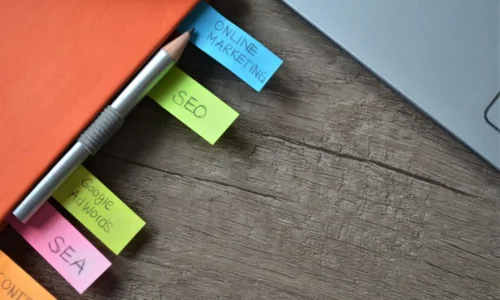
Google has created a highly effective environment for promoting both products and services through website promotion. This tool allows you to create an advertising campaign where, after someone enters relevant keywords into a search engine, the website appears in search results in the fields designated for advertising—usually at the very top of the search results. This allows it to be noticed more quickly. Of course, using this tool incurs costs, but one payment method only charges for clicks. Therefore, it's worth choosing this promotional tool due to its effectiveness and excellent analytics, which allow us to optimize campaigns. Nowadays, it's hard to imagine services marketing without this tool. Check out this post for more information on Google AdWords advertising costs!
Frequently asked questions about service marketing
This is a specific field of marketing that focuses on promoting and selling intangible assets (services). Unlike product marketing, in which the customer receives a physical product, service marketing promotes experiences, knowledge, competencies, time, or access to specific amenities.
Services differ radically from physical products, requiring a different sales approach. They are characterized by:
- Intangibility: They cannot be held, seen, smelled or tested before purchase.
- Inseparability: A service is often created and consumed at the same time (e.g., a visit to the dentist, a legal consultation).
- Heterogeneity (variability): Perfect repeatability is difficult. The quality of a service can vary depending on who performs it, when, and where.
- Perishability: Services cannot be produced in stock and stored (e.g. an empty hotel room on a given day or an empty seat on a plane is irretrievably lost revenue).
The traditional marketing mix for products is based on the 4Ps (Product, Price, Place, Promotion). For services, this was deemed insufficient, and the concept was expanded to the 7P model, adding three key pillars:
- People: The team of employees, their personal culture, competences and clothing – they are often the ones who make up the service in the eyes of the customer.
- Process: The entire path and convenience of customer service (from the method of making an appointment to the form of payment).
- Physical evidence: Physical elements that authenticate the quality of an intangible service, e.g. modern equipment, office decor, a professional website or diplomas on the walls.
Social proof plays a key role in services marketing. Because the customer's purchasing risk is greater, marketers must base sales on:
- Reliable opinions and ratings (e.g. in your Google business card).
- Case studies showing the "before and after" effects of cooperation.
- Video testimonials from satisfied customers.
- Sharing expert knowledge (e.g. through an industry blog, webinars or e-books).
For local service businesses (e.g., hairdressers, mechanics), an optimized Google Business Profile and local SEO are essential. For B2B and national services, Google Ads campaigns (reaching people who are currently searching for a specific solution) and broadly defined content marketing, which shortens the gap and builds an expert image, are crucial.
Summary
The above article covers the following topics:
- Services marketing involves attracting customers with intangible benefits that are both transient and diverse, based on the 7P model. It utilizes traditional channels, such as service providers, as well as modern ones such as the internet, websites, social media, email, and Google AdWords with effective analytics and pay-per-click.