Everyone loves to go on vacation and eagerly awaits this coveted time of year when they can finally step away from their desk for a little longer, turn off their work phone, and devote their free time to sweet laziness, swimming on an exotic beach, mountain trekking, or another favorite form of holiday entertainment. To ensure these long-awaited and anticipated vacations are as enjoyable as possible, travel agencies are meeting the needs of tourists. They offer a multitude of different destinations, hotels, and leisure activities, tailoring offers to their clients, organizing trips for groups, singles, and families with children. Their catalogs feature all-inclusive options, sightseeing tours, horseback riding holidays, and many other possibilities. Can travel agency advertising reconcile all of this? Absolutely!
Travel agency advertising
Due to the rapid growth of tourism, more and more travel agencies are appearing on the market, competing for vacationers. Travel companies are competing in both the quantity and quality of their travel offers, while simultaneously seeking new ways to reach potential customers. They no longer present available trips solely in the form of printouts stuck to office windows or extensive catalogs full of beautiful photos of hotels, palm trees, and smiling tourists. Like other service providers, they're moving their promotions online. Online, they can reach a vast audience of potential customers who are actively searching for available options, casually browsing travel websites, or have previously visited a given agency's website and explored specific destinations.
There are many ways to advertise a travel agency online, and in this post I will show you how to do it with Google Ads – using 3 basic campaign types.
Google Ads is the most popular advertising system that allows you to promote products and services online using text, product, image, and video ads. Google Ads displays various types of ads in Google search results, the Display Network, YouTube, Gmail, and mobile apps.
(The rest of the article can be found below the form)
Thanks to the wide range of possibilities offered by Google Ads , promoting a travel agency online is a very effective move, as advertising can reach a huge number of Internet users, regardless of whether they are already in the search phase or will be planning to do so in the future.
So how do you choose the right type of promotion and prepare effective online travel agency advertising?
As usual, the best answer to this question is: "It depends." It all depends on factors such as budget, campaign reach, and marketing goals. With all the benefits of Google Ads at your disposal , you can use the following ad types:
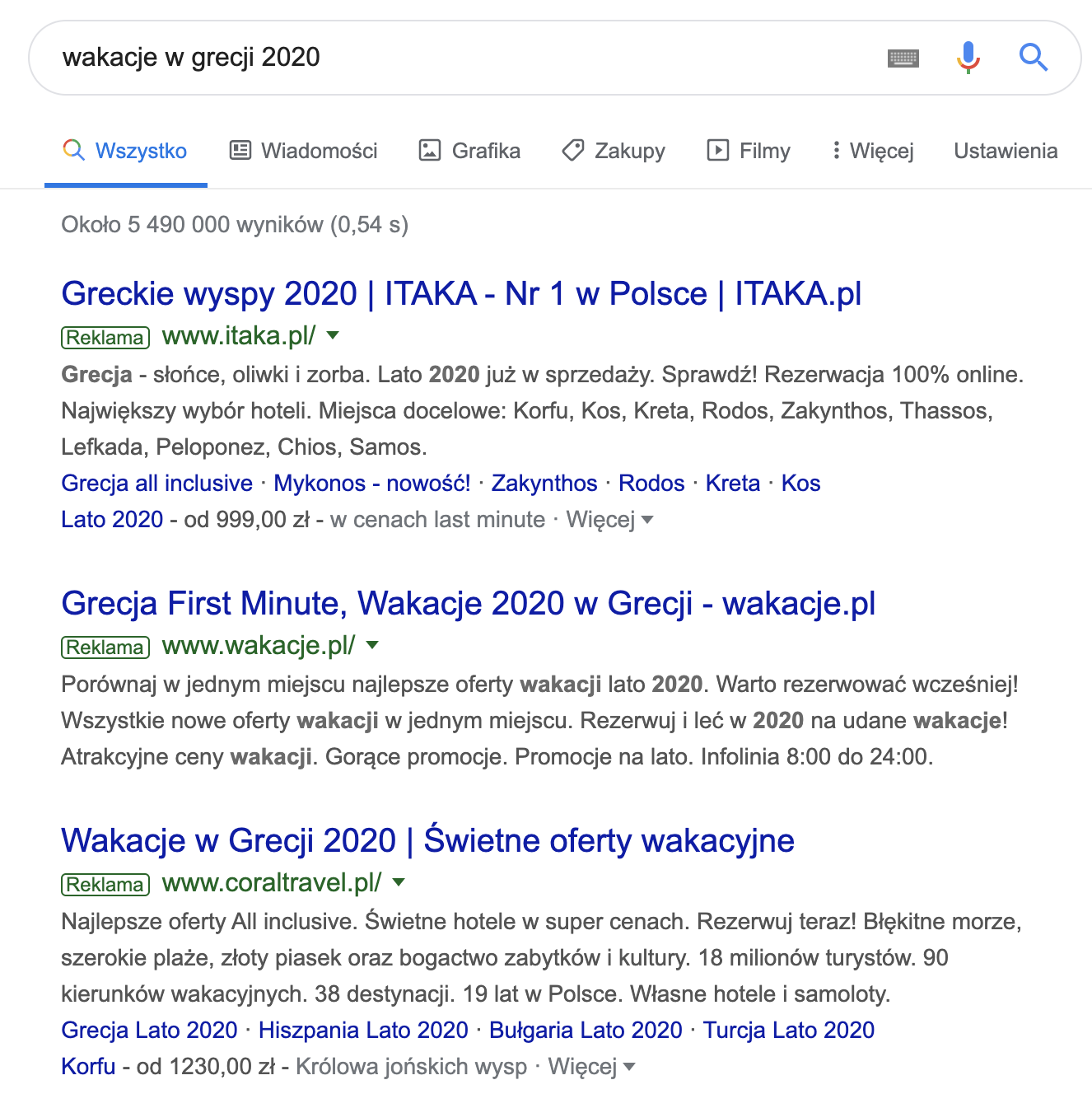
Text ads on the search network

Text ads are displayed in response to keywords entered into a search engine. This way, travel agencies can advertise their services based on:
- a selected destination, e.g. a holiday in Greece, a holiday in Croatia, a trip to Morocco,
- type of holiday, e.g. Italy all-inclusive holiday, Spain holiday by plane,
- holiday/shopping time, e.g. Portugal last minute, Cyprus summer 2020,
- preferred activity/amenities, e.g. Poland holiday hotel with swimming pool,
- specific travel agency, e.g. tui holidays 2020, itaka holidays 2020, etc.
There are many options for choosing keywords. It all depends on the advertiser's preferences, offer, and budget. However, when using text ads, it's important to remember that both keywords and ad content should always be current – avoid displaying outdated offers at all costs, such as those that have already started or seasonal options that have expired.
Because search ads are displayed to people actively searching for specific options, it's essential to highlight the key benefits of your offer. For agencies offering a wide range of travel options, this can require significant work, frequent content updates, and regular keyword changes. However, it's worth ensuring the highest quality of your campaign, as sloppy, generic slogans may not deliver the desired results.
Display Network Display Ads

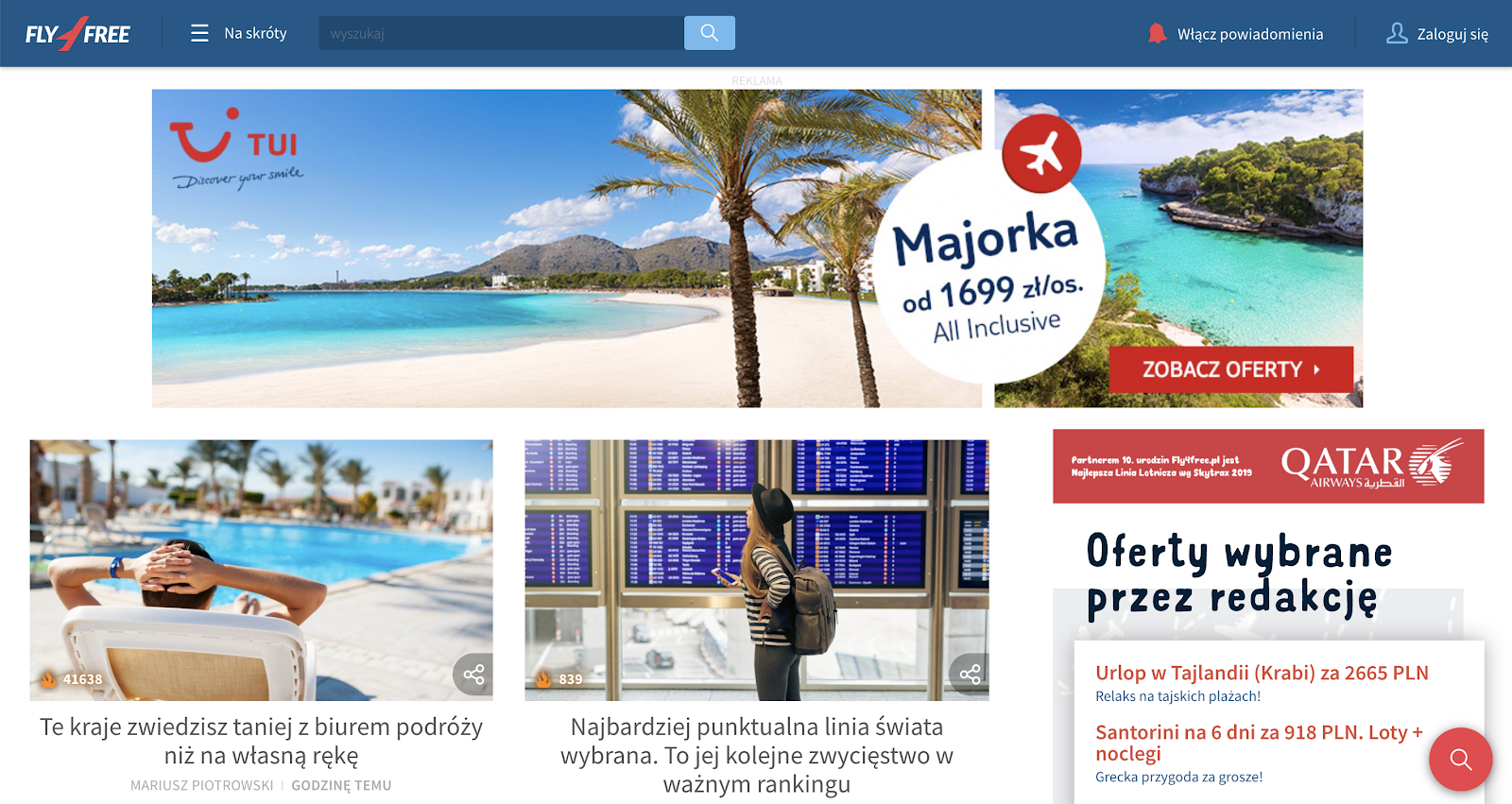
Display ads are displayed to internet users who spend their time online outside of the search engine, i.e., browsing other websites. Thanks to the extensive targeting options for banner ads, travel agencies can present their offers not only to those searching for specific terms in the search engine, but also to internet users who visit, for example, vacation and travel websites (members of the Google Display Network ). This way, beautiful banners that encourage visitors to a given destination can be directed to people such as:
- of a specific gender and age range, e.g. women aged 35-54, if it turns out that they are the ones who most often use holiday SPA offers,
- who browse specific websites, e.g. fly4free.pl, where they look for promotions on flights and hotels,
- who visit websites related to tourism in its broadest sense, e.g. those regarding accommodation, diving, amusement parks and even car rentals,
- who (thanks to their online behavior) are known to be interested in traveling, e.g. they like to travel with their family or are beach lovers, etc.
Remarketing is also available within the advertising network. Remarketing allows you to display display ads to people who have previously visited the advertiser's website and browsed holiday offers, for example, for the previous year.
When technically possible, remarketing also allows advertising to return to people who have already used a travel agency's services, for example, by making an online reservation, as well as to those who have started the process but not completed it. Properly designed banners, especially those offering a small discount or other convenience, can effectively encourage internet users to make a repeat purchase or complete it.
Banner ads, just like text ads, should be updated regularly and the prices/dates/destinations presented on them should always be up-to-date.
You might like it
Video ads on YouTube
More and more internet users are looking not only for text reviews about their destinations and the travel agencies they use, but also for research, they're using YouTube and the videos it hosts. Videos tend to reveal more details than photos, which have likely been heavily edited. Furthermore, recently popular vloggers and other travelers are eager to share tips on places worth visiting, present the best restaurants in a given location, or advise on the best things to pack for a given destination.
That is why travel agencies are appearing more and more often in YouTube.

They run their own channels there, where they regularly post new, juicy advertising spots and use the most popular advertising formats available there, namely:
- True View in Stream – short advertising videos displayed before, during, or after the videos viewers are watching. Clicking on such a spot allows users to be redirected to the advertiser's channel or website to obtain detailed information about the offer.
- True View Discovery – advertising banners displayed above upcoming videos or in YouTube search results. Clicking on such a banner allows you to view the advertising video.
YouTube video ads are displayed to internet users in a manner almost identical to the targeting of banners on the Display Network – based on demographic data, audience interests, video themes, or URLs of specific channels or videos. They are most often a complement to search engine or display network campaigns. They work perfectly as remarketing ads, encouraging people who have already visited the agency's website to book a vacation not only through the ad content but also by providing a real-world example of what a vacation in a given location might be like.
Travel agency advertising – summary
Of course, the three types of campaigns described above are not the only way to promote a travel agency on the Internet – there are plenty of options, and ads on Facebook or LinkedIn are suitable for separate posts in this context.
If you want your offer to be found online and your travel agency advertising to bring effective results, be sure to try Google Ads, and if you don't know how - WRITE TO US!
Frequently asked questions about travel agency advertising
The tourism industry is extremely competitive and characterized by significant seasonality. Furthermore, the customer decision-making process is typically lengthy – purchasing a trip is a significant expense that requires careful consideration and consultation. This requires agencies to properly plan campaigns in advance (e.g., first-minute offers) and reach users through multiple channels.
The foundation is text-based search campaigns, which capture users with specific intent (e.g., those typing "all-inclusive Greece vacation"). AI-powered Performance Max campaigns also work well, allowing visually appealing ads to be displayed in multiple places simultaneously (YouTube, Gmail, Display Network).
Travel sells on excitement, beautiful scenery, and the promise of relaxation. Facebook and Instagram are ideal platforms for inspiring customers with high-quality photos and videos. The Meta ecosystem also allows for highly precise ad targeting to people actively interested in travel or who have previously researched specific destinations.
SEO is the foundation of a long-term strategy. Instead of competing for generic keywords (like "travel agency"), it's worth focusing on long-tail keywords and maintaining an expert travel blog. Creating valuable guides (e.g., "What to see in Tenerife") attracts free organic traffic and builds brand trust. Local SEO and a Google My Business listing are also crucial for brick-and-mortar agencies.
Due to the lengthy decision-making process, few people book a trip on their first visit to a website. Remarketing (including dynamic remarketing) allows you to "follow" a customer online and remind them of the exact hotels or flights they previously viewed. This is a key activity that closes the sale and prevents customers from losing to competitors.
Summary
The above article covers the following topics:
- effective online travel agency promotion,
- how to use text ads on the search network,
- banner campaigns in the advertising network,
- how video advertising works on YouTube.