Contents
You are now reading:
What is marketing? Basic types and its application in corporate strategy.
Close
Marketing is an integral part of a company's functioning in the marketplace. No matter what industry you operate in, you don't exist in a vacuum. The very life of a business depends on convincing customers to buy your products. To sell them, you must communicate with them. And that's precisely what marketing is for. What exactly is its definition? What are the types of marketing? Learn what marketing is now!
Marketing – an “invention” of the 20th century?
The concept of marketing emerged relatively recently, roughly after World War II, in the United States. However, the fact that the phenomenon was not named until then doesn't mean that marketing itself only emerged in the mid-20th century. After all, the first advertisements can be found in archaeological sites dating back to ancient Greece and Rome. After all, competition in the world of selling products and services never sleeps. It must be admitted, however, that the 20th century—not to mention the present—was a time when the market developed extremely dynamically. We operate in a consumer-oriented society, with extensive needs and open to new products and services. The number of brands, products, and solutions grows not only year by year but also by the minute. And since this is the case, the very activities intended to encourage customers to choose product X over Y are also evolving. Modern marketing—the one we know today—differs from earlier promotional attempts in one crucial detail: it takes the form of organized, strategic activities, subordinated to a specific goal. While there's plenty of room for creativity, there's no room for chance and chaos. This is when the likelihood of blowing the budget is highest.
What is marketing?
The question of what marketing is is more difficult than it might seem. Not because there's a lack of a definition. Quite the opposite. Over the past few decades, a multitude of such questions have emerged, as have disputes over what is and isn't marketing. For example, are PR activities a part of marketing, or a completely separate field? And... does it even matter? If we define marketing as all activities that support product sales and influence customer decisions, then not necessarily. This group of activities can include almost everything—from brand logo design to social media activities and price reductions. One thing is certain: marketing focuses on consumer needs and meeting their needs through a specific product or service offering. By working in this direction, a company increases the likelihood that customers will choose its offering over the competition—because it will better meet their expectations.
Is marketing the same as advertising?
It's undeniable that the two concepts are strongly related. However, they are not the same. Advertising is a component of marketing strategies. These are specific, promotional-focused messages sent to recipients. However, marketing itself encompasses a much broader range of activities, including:
(The rest of the article can be found below the form)
Fill out the form and schedule a call with an expert
We'll get to know your business and prepare a personalized quote for the optimal marketing mix. Completely free.
The controller of your personal data is Verseo, a limited liability company with its registered office in Poznań, at ul. Węglowa 1/3.
About Verseo
The Company's registered office is located in Poznań. The Company is entered in the Register of Entrepreneurs maintained by the District Court for Poznań – Nowe Miasto and Wilda in Poznań, 8th Commercial Division of the National Court Register, under KRS number: 0000910174, Tax Identification Number (NIP): 7773257986. You can contact us by mail at the address provided above or by email at: ochronadanych@verseo.pl
You have the right to:
- access to your data,
- rectification of your data,
- request deletion of data,
- processing restrictions,
- object to the processing of personal data,
- transfer of personal data,
- withdrawal of consent.
If you believe that we are processing your data contrary to legal requirements, you have the right to lodge a complaint with the supervisory authority – the President of the Personal Data Protection Office.
We process your data for the purpose of:
- handling your inquiry, pursuant to Article 6(1)(b) of the General Data Protection Regulation (GDPR);
- marketing purposes consisting in the promotion of our goods and services and ourselves in connection with the consent you have granted, pursuant to Article 6(1)(a) of the GDPR;
- securing or pursuing possible claims in connection with our legitimate interest, pursuant to Article 6(1)(f) of the GDPR.
Providing your data is voluntary . However, without it, you will not be able to send us a message, and we will not be able to respond to you.
We may transfer your data to trusted recipients:
- providers of tools for: website traffic analysis, sending marketing information.
- entities responsible for hosting (storing) the website and personal data.
We will process your data for the period of:
- necessary to achieve the specific purpose for which they were collected, and after its expiry for the period necessary to secure or pursue any claims
- in the case of data processing based on consent until its withdrawal. Withdrawal of consent does not affect the lawfulness of processing prior to withdrawal.
We do not process personal data in a way that would involve making solely automated decisions about you. More information regarding the processing of personal data can be found in our Privacy Policy.
- inform the client about the existence of a given problem/topic or highlight it,
- inform about the existence of a specific brand/product and maintain this awareness in the long term,
- arouse interest and encourage interaction (which does not necessarily have to involve a purchase at the beginning),
- help "push" the customer towards conversion – understood not only as purchasing a product, but also, for example, leaving contact details or starting communication with the brand,
- build a positive brand image based on a specific set of values,
- build and maintain communication with the target group of potential customers – also to constantly examine their needs and better tailor the products offered,
- build long-term relationships and brand loyalty – so that the customer returns to it many times.
The very description of these marketing objectives shows that advertising itself constitutes only a fraction (a very important one!) of this area of operation in the business environment.
Is marketing the same as sales?
The sales transaction is the final stage, always led by marketing activities. It is therefore the result of marketing. However, marketing itself does not focus on closing the sale, such as negotiating the final terms of the contract with the customer. The marketing funnel leads the customer from interest in solving a problem or addressing a need, through interest in a product or service, to generating a need for a specific solution.
- Marketing 4P – the basic model of every marketing strategy
- Marketing goals – how to set them according to the marketing definition?
Marketing activities are also conducted after the sale is completed, to maintain communication with the customer and ensure they return. It's worth remembering these differences and viewing marketing as a separate element of market communication—the most diverse and crucial to business effectiveness.
The 7P concept, i.e. the elements that make up marketing
To further understand the aspects of marketing, we can refer to the marketing mix concept, a network of interconnected elements that influence a company's market environment. In its first version, created in 1960, E. Jerome McCarthy discussed the 4Ps, which emphasized that the success of a company's strategy is influenced by:
- product – its quality, design, packaging, brand and suitability to customer needs,
- price – the price of a product also determines its demand. However, this does not mean that pricing policy must be aimed at reducing prices as much as possible;
- distribution channels (places) – i.e. the sales market where the products are delivered,
- promotion – this includes, among others, advertising, PR activities and merchandising.
Currently, the professional literature also adds further aspects to this list, such as:
- people – this refers to both the staff serving the customer and the customer himself,
- process – the way customer service is carried out, from the moment of interest in the offer to after-sales service,
- physical evidence – all the “tangible” elements of a company’s image that influence its perception, e.g. the brand logo, its website, its visual identification system or the appearance of its headquarters.
Other "Ps" are also emerging, such as "pleasure," meaning the pleasure derived from using services, so important in today's consumer market. As you can see, defining marketing is a complex topic. One thing is certain: if you undertake any activity with the ultimate goal of increasing sales, it's a part of marketing. Since marketing encompasses such a wide range of activities, you can imagine that various divisions and classifications also exist. It all depends, of course, on the chosen criterion.
Traditional and online marketing
The most popular functional criterion is the division into "traditional" and digital marketing, or more specifically, online. The difference between them is obvious. The former focuses on direct communication with customers, as well as through traditional media – such as print, radio, television, and outdoor advertising. This group can also include all kinds of promotional events, as well as offline word-of-mouth campaigns. But what about online marketing ? It currently serves as the foundation of market communication. Therefore, it's worth taking a closer look and learning about its most important varieties.
Internet Marketing – Varieties
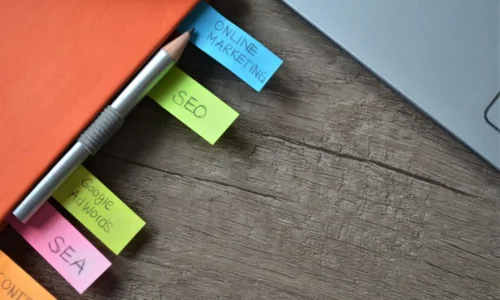
Marketing, especially online marketing, is a very broad category of activities. Which one should you choose? It depends on factors such as your industry, your target audience, and your promotional goals. However, it's worth taking a look at the most popular types.
SEO marketing
These are all activities related to website positioning . They are the absolute foundation of customer communication in the 21st century. Why? You'll answer this question yourself if you take a moment to consider where they look for information, for example, about good restaurants in the area or reliable household appliances. The modern consumer first heads to a search engine and usually clicks on the first few results. And since this is the case, the position your website achieves in the SERPs (search engine results pages) determines how effectively you reach customers.
Content Marketing
This is called content marketing , meaning all activities related to "textual" communication with the audience. This broad category includes, among others, content published on your website (and not only that, but also for SEO purposes), external image-building articles, as well as product descriptions, and much more. The better and richer the content you create, the greater your brand's market potential.
Social media marketing
This includes all marketing communication activities conducted on social media – for example, Facebook, Twitter, Instagram, or LinkedIn. Note: This isn't just about paid advertising, but primarily about adding engaging posts, building a community, and communicating with its members.
videomarketing
Contrary to appearances, this isn't the same as television commercials. The content of video materials posted for marketing purposes can be completely different. Popular examples include topical guides with product placement, collaborations with vloggers, and clips purely for image-building purposes.
Remarketing
These are automated activities designed to display ads to consumers related to their previous online searches. For example, someone who visited an online clothing store's website will see its ads when they visit other websites. Remarketing is one of the most interesting solutions, especially in the context of abandoned shopping carts.
Word of mouth marketing
Based on product and service recommendations – these days, these increasingly often include authentic customer reviews. It's also worth mentioning mobile marketing, activities aimed at interacting with smartphone users (including sending text messages with promotions!), and above all, inbound marketing, which is "inbound" marketing aimed at arousing the recipient's interest – so they actively seek out content related to a specific brand and offers. Strategies based on this are considered the most effective. This list, of course, doesn't exhaust the variety of marketing options. But it will never end, as new ways to reach customers are constantly emerging – as the market itself, technology, and social needs evolve. Keep this in mind when planning your marketing strategy – to be effective, it must be aligned with current trends.
Marketing FAQs
Marketing is a complex process of identifying, anticipating, and satisfying customer needs in a way that generates profits for the company. It's often mistakenly associated solely with aggressive sales or advertising – in reality, it encompasses the comprehensive building of value, relationships with customers, and the creation of a positive brand image in the marketplace.
The ultimate and most important goal is always to increase a company's sales and profits. However, to achieve this, marketing pursues intermediate goals: building brand awareness, acquiring new contacts (lead generation), educating the market, and ensuring the loyalty and retention of existing customers.
The basic division distinguishes traditional (offline) marketing and online (digital) marketing. Traditional marketing utilizes traditional media such as television, radio, print, billboards, and flyers. Digital marketing, on the other hand, focuses entirely on the digital space (websites, search engines, social media).
- Inbound Marketing: This involves creating valuable, useful content (e.g., blog articles, free guides, SEO activities) that encourages customers to find your company when they're looking for a solution to their problem. This approach is unobtrusive and builds trust.
- Outbound Marketing: This is a traditional approach in which the company itself initiates contact, "pushing" its message to a wide audience (e.g. through TV ads, banners, cold calling or mass mailing of leaflets).
The digital space has evolved into many highly specialized disciplines. The most basic and effective include: organic search engine optimization (SEO), paid sponsored link campaigns (PPC, e.g., Google Ads), content marketing, social media marketing, and email marketing.
Summary
The above article covers the following topics:
- Marketing is strategically organized activities that support sales by meeting consumer needs, building brand awareness and long-term relationships.
- The 7P concept includes product, price, distribution, promotion, people, process and material evidence.
- Internet marketing is divided into SEO, content marketing, social media, video marketing, remarketing and word of mouth marketing.