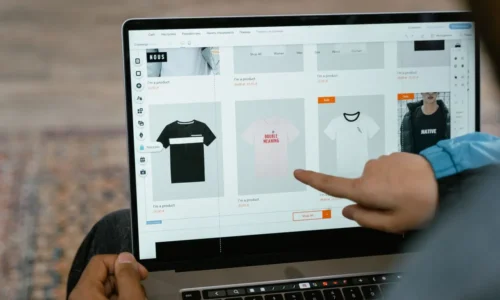
Online shopping is clearly gaining popularity – more and more Poles are recognizing its benefits, overcoming their prejudices and habits. However, this doesn't mean that simply creating an online store is enough to be successful. The increased popularity of this type of shopping also means increasing competition. So how do you start an online store? Check out our tips!
How to start an online store and ensure its success?
Have you been running an online store for a while but still aren't getting enough orders? Or perhaps you're just planning to enter the market but want to make sure you're off to a flying start? Regardless of your motivation, it's worth knowing how to attract more customers to your online store. Good sales aren't a matter of luck, at least not usually. Success is much more likely to come from those who consistently work for success while ensuring consistency and thoughtfulness in their efforts. This is even more important given the growing number of online stores, resulting in growing competition. Starting online trading is often just a matter of a few clicks, but achieving success is much more difficult.
Below, you'll find proven ideas for starting an online store. Combining at least a few promotional methods will yield the best results. Don't forget the basics either – no amount of advertising will help you stand out if your store's website is dysfunctional or you can't offer adequate customer service. This will only generate more traffic, but it won't translate into more transactions. Pay attention to the store's design, appearance, and clear layout. Strive for optimal product display (plenty of photos, detailed descriptions, etc.). Consider what makes your offering stand out and focus on promoting that feature.
First: SEO
SEO (Search Engine Optimization) is a process focused on optimizing your website to meet the requirements of search engines, especially Google. This helps your website appear higher in search results, leading to more people finding it. Optimization produces long-term results, although it takes time to notice them. That's why it's worth prioritizing it – you're thinking about your store in long-term terms, right? 🙂 Theoretically, it's a free form of advertising – you just need to constantly work on optimizing your website to start seeing better results. In practice, however, effective efforts require knowledge, time, and dedication. Therefore, working on SEO usually comes down to hiring a specialist in this field or using the services of an agency.
(The rest of the article can be found below the form)
Optimizing a website according to SEO principles encompasses many factors. They can be divided into two groups. On-site activities are conducted directly on the website and involve preparing it appropriately – in accordance with the requirements of search engine algorithms. This involves adapting the entire website structure and content. The most important on-site activities include:
- supplementing missing content – primarily product descriptions,
- eliminating duplicate content,
- saturation of content with keywords,
- appropriate selection of content structure – length, headings, paragraphs, attributes,
- supplementing meta data,
- use of internal linking,
- adapting the website to display on various devices (responsiveness),
- code optimization and organization.
All of these factors influence a website's visibility, though there are, of course, many more. Furthermore, off-site activities, primarily building a database of links leading to the website, also aid in SEO . When conducting any SEO-related activities, it's important to remember to adhere to best practices. This is crucial, as algorithm updates have repeatedly cut traffic to websites that overly aggressively build specific areas—for example, the link profile.
Secondly: Google Ads
Systematic and ongoing SEO efforts will allow you to steadily climb the search engine results – provided they're implemented correctly, of course. However, if you operate in a competitive industry, it's highly likely you'll never reach the top. However, there are shortcuts. Thanks to Google Ads, specifically sponsored search engine links, your website can appear at the very top of search results. Experience shows that such advertising can be very effective when implemented correctly. This is a very simple answer to the question of how to quickly and effectively launch an online store.
Google Ads is, in fact, a very comprehensive tool available to and successfully used by both small and large businesses. Payments are charged only for clicks on the ad, which is a very advantageous payment model from the entrepreneur's perspective. However, this requires very precise configuration of settings. Properly selecting parameters can generate significant profits at a low cost. Sponsored links are unobtrusive and don't seem like intrusive advertising to the average user, and the ability to precisely define criteria for who receives sponsored content significantly increases the effectiveness of this solution.
Google Ads also offers the option of using display advertising. This is very effective if you don't know how to launch an online store that no one knows about. This method works primarily for increasing brand recognition and building brand image. It involves displaying your store's banners on various websites that provide Google with advertising space. You can decide which websites your ad will appear on, which increases its effectiveness.
Remarketing advertising works very similarly. It's a great tool for stores experiencing significant cart abandonment (a customer adds items to their cart but doesn't complete the transaction) or other conversion issues. Your store banners are then displayed to customers who have already visited your store. You can choose to display dynamic content, meaning it's tailored to a specific user. This way, they'll see products they've previously viewed, as well as other, related items. This type of advertising can be very effective!
Third: social media
A social media presence is practically mandatory for every business these days – especially for online stores. Profiles on popular platforms act as constant advertising. The possibilities for using them are vast. Through regular, engaging posts, you can systematically grow your audience and influence their engagement. By also engaging in replying to comments, you help potential customers feel and strengthen their connection with your brand. This is a unique way to communicate with your audience in two directions. You can also receive feedback on your activities – learn what people like and dislike. This way, you can also receive ready-made tips on how to launch an online store.
Moreover, the most popular social media platforms allow for paid advertising, which allows you to reach a much wider audience. These include Facebook and Instagram, which offer advertisers a wide range of opportunities and often satisfying results. However, it's worth leveraging the advertising potential of all the platforms you operate on.
Speaking of which, when it comes to social media, there's no point limiting yourself. Most companies have a Facebook page but don't try to establish a presence on other platforms. This is a big mistake, as that's often where your customers are! Social media is a way to reach them directly, especially if your target audience is younger. Check out what YouTube has to offer (you can also launch YouTube campaigns through the Google Ads panel), TikTok, or Pinterest – it's very possible that you'll gain more customers thanks to your presence on these platforms.
Systematicity, diligence, and tailoring content to your potential audience are the most important rules for operating on social media. You need to know who you're targeting, demonstrate interest, and prioritize originality. Posts that are forced, thoughtless, and simply boring will certainly not produce the desired results, and may even have the opposite effect than you'd hoped.
Fourth: company blog
A company blog is the most important tool for content marketing. It's considered one of the most important and effective ways to stand out online. Content marketing has much in common with SEO – publishing high-quality content infused with relevant keywords can significantly improve a website's Google ranking. It can also attract and engage customers. Therefore, it's a great method for anyone wanting to learn how to start an online store.
What does it involve? Content marketing is based on publishing valuable, useful, interesting, and original content (the form is also important). While it's not just about text (you can also publish videos, infographics, podcasts, and much more), a company blog is one of the simplest forms of content marketing. Simply consider what interests your customers or recall the questions they most frequently ask about your offerings, and transform this information into blog articles. It's important to ensure they are as substantive and comprehensive as possible. Position yourself as an expert, and this will help you build a positive image for your store. Write more about your products, their functions, uses, key features, and perhaps even how and where they're made. This will generate significantly more interest and trust.
You can manage a company blog yourself, although most companies choose to hire professionals—a content marketing agency, an SEO agency, or a copywriter. A specialist can use the information you provide to help create unique content. They will also ensure the overall blog has an optimal format and style, is linguistically accurate, and is attractively presented. They will also ensure keyword usage is in line with SEO guidelines.
Fifth: email marketing
Email marketing often takes a backseat these days, even though not so long ago it was the primary form of advertising for entrepreneurs considering how to launch an online store. Today, it's more of a supplement, but it's still worth giving up. By building your own email contact database, you become independent of social media (e.g., in the event of a crash, a hacker attack, or other factors that prevent you from using your account), and you gain an additional channel for communicating with customers. It's worth encouraging newsletter subscriptions, for example, by offering a small discount on orders. Emails can also be used to remind customers about promotions or sales, inform them about new products, and any changes taking place in the store. Emails help customers remember your store and motivate them to visit your website.
Importantly, the cost of email marketing is low. You can outsource the content and graphic design to professionals or create your own. Email sending tools are inexpensive – there's no shortage of functional free programs on the market, even if your subscriber base is small.
How to conduct modern, effective email marketing? First, don't forget about the format. Make it inviting, attractive, and consistent with your store's image. Use CTAs (Calls to Action) to encourage visitors to click through to your website. Second, consider personalization. Let customers choose what type of information they want to receive, which product groups they're interested in, and so on. This significantly increases the effectiveness of your messages!
Sixth: discounts, promotions, loyalty program
How can you boost your online store's sales and traffic? One thing's for sure: nothing motivates people to shop like a price drop. Sometimes it's hard to bring yourself to offer a promotion in a store that's barely making a profit, but believe me, it's worth it. Promotions should be frequent and varied. Ideally, they should appear at least once a month, and you should incorporate them into your business model. There are plenty of ideas for effective promotions like this!
For example, you can reduce the prices of products from a specific department or group every weekday (or weekend, for example). Promotions will be even more effective if the discounts are tailored to user needs and tied to current events. There are also stores that offer daily promotions, with the scope of promotions changing weekly. An example? An online drugstore running weekly promotions on four selected cosmetic brands. Alternatives to discounts include promotions like "two for the price of one," "buy a product, get the second one half price," or "free shipping." These types of promotions are very effective in encouraging purchases and also encourage more frequent visits to the store or newsletter signups.
In addition to regular or recurring promotions, you can also use discount codes as a thank-you for loyalty – for example, a 10% discount on future purchases for anyone who signs up for a newsletter and spends a certain amount. Another method is cashback – for example, 10% of the order value is stored in the customer's account and can be used as a discount on future purchases. Such discounts should have an appropriate expiration date to ensure they can be used without any delay.
Online stores also readily adopt other forms of loyalty programs. For example, you can promise your customers a gift with their fifth order or create a system of points redeemable for discounts or rewards. The well-known clothing chain H&M encourages people to sign up for its Customer Club this way. Participants receive a 10% discount coupon for every 300 PLN spent. Accumulating a certain number of points throughout the year grants Premium status, which comes with certain privileges, such as early access to sales, limited competitions, and a guarantee of free deliveries and returns on every order.
I'm bringing up loyalty programs somewhat out of obligation. Personally, I don't believe they work. They're typically used by customers who would use our services anyway. Furthermore, we have to invest advertising budgets in promoting them anyway, so the question remains whether it wouldn't be better to direct it toward acquiring new customers. The viability of a given loyalty program likely depends on many factors, so you'll need to test the solution yourself. There are no ready-made answers.
Seventh: cross-selling and up-selling
If you're not offering your customers similar or complementary products related to what they're viewing or selecting, you're making a serious mistake. Cross-selling and up-selling are very simple techniques that can significantly increase sales. A customer added sneakers to their cart? Offer them socks made of breathable yarn. Buying a smartphone? They should see a window with recommended accessories—for example, a protective case, wireless headphones, or a power bank. This type of tactic is called cross-selling.
Upselling can also work for some online stores, though it's more common in services. Has a customer chosen a smartphone with 128 GB of storage? Ask if they'd prefer the larger 256 GB version, specifying, for example, "pay only PLN . . . extra" or "choose a higher version and receive a 10% discount." Simple? Absolutely, but incredibly effective.
Eighth: use the possibilities of sales platforms
Some online store owners, in addition to their own platform, also use services like Allegro and Amazon, although this naturally involves paying a commission. The greatest strength of these e-commerce giants is the number of users, and therefore potential customers, who may be interested in your online store's offerings. Matching prices, ensuring appropriate offer descriptions, images, and keywords have a huge impact on good sales results – but that's not all. Both services also offer the option of using an advertising system that promotes your products, increasing the chances of conversions. Allegro tools like Allegro Ads, combined with the right know-how, can be incredibly useful.
Ninth: Analysis
You can implement all of the above methods and still not achieve the desired success. Therefore, try never to act blindly. Constantly analyzing your own actions, as well as observing what your competitors are doing, are crucial components of success. You won't improve anything if you don't measure it first. With analytics, you can instantly see what's working and what's not – and then adjust your steps accordingly. Follow the advice above, and you'll quickly forget about difficult times and never search for information on how to start an online store again! 🙂
Summary
The above article covers the following topics:
- Online store development strategy