Although we tend to think that economics, and with it the entire sales process, is based solely on profit and loss calculations, it has long been known that it's not an exact science in the strict sense. It could be called an interdisciplinary mix of mathematics, psychology, sociology, and many other fields. We buy with our wallets, of course, but that's only the final step—we are primarily driven by the emotions that accompany the entire experience with a brand or store. Therefore, the customer journey requires analysis and appropriate attention.
The importance of emotional coverage is openly emphasized primarily by show business representatives (e.g., Maciej Kawulski, co-owner of the KSW combat sports federation: "We don't sell skills, we sell PPV and emotions"), but almost every modern entrepreneur understands the importance of the non-financial aspects of sales. The customer should not only buy something, but also feel good about it.
Even the process of buying screws, pens, or a phone case can be a carefully orchestrated spectacle, leaving the customer satisfied and likely to return to your store again. This isn't about unfairly manipulating the customer and persuading them to make an unfavorable decision, but about building a long-term relationship based on trust and mutual respect.
Due to its specific nature, the e-commerce industry generates vast amounts of data. In simple terms, we can track every user move on our website, in social media, and, thanks to cookies and advanced profiling, virtually anywhere on the Internet.
(The rest of the article can be found below the form)
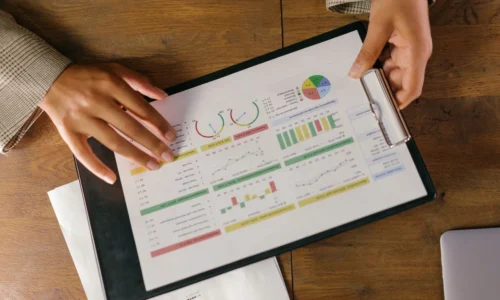
For this reason, e-commerce is increasingly relying on analytics every day . While intuition remains a crucial element in business, it cannot compete with terabytes of detailed data on user behavior and profiles. With powerful analytical capabilities, you can understand customer expectations and see how they interact with your brand, how they browse and purchase, and whether they're satisfied with the overall experience. This allows you to design every element of this relationship and tailor it to the user's expectations.
Customer journey – what will you need?
To analyze your website's user behavior and professionally determine whether the customer's purchase journey within your website requires review, Google Analytics is crucial. This powerful system provides in-depth data about your website and its users. If you're interested in getting started with this tool, we have a beginner's guide on our blog – we encourage you to read it!
A Google Analytics feature you should pay particular attention to in the context of the customer journey is Behavior Flow. This component can, among other things, group content and individual pages and link them to user behavior, generating detailed reports. Reports identifying multi-channel paths and key conversion paths can be equally useful.
The HotJar tool can also help. By tracking user cursor movements, it allows you to identify which page navigation elements are working well and which ones could be improved.
You might like it
The shopping journey and customer experience
The customer journey can be divided into layers. Each layer is characterized by a different level of customer relationship, requiring slightly different solutions and tools. From the vast array of available methods, we've selected a few that have proven their effectiveness. While this isn't the entirety of the journey, it provides a solid foundation.
 proposals at the stages of the customer's purchasing path
Building Awareness
The first moment when the customer's purchasing journey becomes apparent . They're considering purchasing a new service or item. Often, they don't have specific needs yet – they're looking for holiday gifts or Black Friday deals, for example, and they enter a general phrase related to that into a search engine. This is where the magic begins, or rather, advanced marketing tools that will allow you to become friends with your customer and reap mutual benefits.
The first step for a brand should be to say out loud, "I am." Several solutions can be crucial at this stage:
- Text advertising on the Google search network – the most popular advertising format in the world for many years. The system displays sponsored links in search results that match the user's entered phrase. [link to a specific guide on Search Ads on the Verseo website]
- SEO – thanks to the appropriate positioning Your website will rank higher in search results for a specific phrase, and as a result, it will generate more visits and – probably – transactions.
- Social media advertising social media have become one of the foundations of online marketing. On Facebook, Instagram, and LinkedIn, users provide systems—and therefore marketers—with hundreds of pieces of information about their interests, behaviors, and views. This allows them to signal their brand's presence to people who might be potentially interested in it.
- Google Display Network – a system that allows ads to be displayed directly on specific websites. GDN covers over 90% of the Polish internet, including major portals such as WP, Interia, Gazeta.pl, Pudelek, and Onet. To use GDN, advertisers must access data about user interests and target ads to them based on that information.
- YouTube Ads, e.g. bumper – short advertising formats displayed on YouTube platformBumpers, lasting a maximum of 6 seconds, work well in building brand recognition.
- Blog – this is a useful tool at the stage of creating brand awareness. A blog post, for example, with gift suggestions for a given occasion, can signal to the customer a purchase need they may not yet be aware of.
If your efforts were effective, your brand managed to gain the attention of a potential customer. This means the tools you used did their job. You caught someone's attention—and not just anyone's, but someone who, by clicking, expressed interest in your products.
This is a good start, but not only does it not guarantee success, but it may even mean little. It's time for the second layer of the path.
Consideration
The customer already knows you exist. Now it's time to convince them that your offer is the best choice for them. Let's be honest – your brand is probably not the only one they're considering.
At this stage, two aspects will be crucial – appropriate content and UX (user experience).
- Well-tailored content on the category or product page – an attractive and substantive description, photos, promotional materials, video presentation, etc. will make the customer consider your offer.
- UX will ensure that the content layout and navigation on the website are user-friendly enough to make the pros and cons analysis positive, and that the process of adding a product to the cart and then finalizing the order is convenient and quick.
The following may also be useful in this step:
- Google Search Network Ads – customer expectations begin to crystallize. At this stage, search terms become less general; for example, instead of "holiday gifts," phrases like "drone with camera" or "tricycle" appear. Thanks to Google Search Ads, your offer can appear on the first page of search results even if your website isn't well positioned.
- Product Listing Ads (PLA) – a solution requiring Google Merchant Center that allows direct advertising of a specific product, along with its image, description, and price. Ads are displayed both on a dedicated Google subpage and in search results.
- Customer reviews on Google, on forums, and on social media – finding information about a given company, the quality of its products, and its approach to customers online takes just a few seconds. Make sure not only that the product matches the description, but also your attitude and how you handle controversial situations – an image crisis can set back the development of your brand for years.
- Landing page – the page a user lands on directly after clicking a link. This can be a category or product page in a store, or any other subpage, but the term landing page often exists in the collective consciousness as a subpage created specifically for the promotion and sale of a specific item or service.
- Blog A substantive blog will help your brand establish itself as an expert in a given industry, and is also a great source of organic traffic and sales support. Posts about a given product category provide space to showcase your product range, highlighting its advantages.
- Price comparison websites These convenient store and product aggregators allow users to quickly access similar offers and compare them. Millions of potential customers use these comparison sites – ensure your presence on such sites and the proper presentation of your product range.
- FAQ (list of frequently asked questions) – after a while, you'll be able to identify certain issues in your customer relationships that come up repeatedly. So, you can prepare a list of the most frequently discussed topics and compile them in one place – this will immediately put your coffee on the table and save time – both yours and the potential customer's.
Acquisition
It's time to make the conversion happen.
- Dynamic remarketing – is useful at virtually every step of the sales funnel, but it plays the most important role precisely at this stage. Thanks to remarketing implemented not only in Google Ads, but also on social media (e.g., Instagram and Facebook), you can remind people about your presence and your offer. This way, you can also "ask" customers who have registered on the website and even added a product to their cart to complete their purchase, but for various reasons, didn't complete the transaction.
- YouTube ads with particular emphasis on YouTube for Action – a special video ad format tailored to increasing conversions. It consists of a CTA, a headline, and – after playback – a special panel encouraging users to click the link.
- Allegro Ads – advertisements using the infrastructure of the largest Polish sales platform.
- Web push – notifications from websites displayed by browsers. These notifications allow you to remind potential customers who are currently browsing other websites about your offer.
In addition to advertising tools, it is worth paying attention to other facilities at this stage that are of great importance for conversion – for example, the quick payment module, which allows for almost immediate transaction completion.
After-sales care (Service)
For a brand's relationship with a customer to be lasting, it can't end with simply "pushing out" a product. Therefore, after the transaction, comprehensive after-sales support must be ensured.
- Technical Support Few businesses assume that a product might be defective or simply require some less obvious action from the customer. However, in a certain percentage of cases, such situations will arise. A competent technical support department will provide the customer with assistance, support the development of your brand's expert image, and, above all, give the customer the impression that the feelings are reciprocated.
- User-friendly warranty process If a product clearly fails to meet customer expectations due to defects, you must take responsibility for the inconvenience and ensure the product is repaired or replaced with a full-fledged product. If a customer sees that they can count on your brand in the event of legitimate difficulties, they will be more likely to return for further products.
- Additional materials such as FAQs containing technical issues of the product described in a user-friendly form – thanks to this, the customer can find an answer to the question that concerns them without involving the technical support department.
Loyalty
You've successfully sold a product and met the customer's expectations. You've built a relationship – now you need to maintain it and ensure the customer returns to your store the next time they need it.
What will be useful at this stage?
- Dynamic remarketing – You already know your customer profiles and can offer them another offer. The potential of remarketing is enormous – thanks to this tool, customers can find your brand again, for example, while scrolling through Instagram or – thanks to the Google Display Network – even while browsing news on various websites. If a customer is already on your remarketing list, you can send them messages at any time – for example, when you offer new Black Friday promotions and the customer has previously purchased products from a given category.
- Newsletter – Email marketing is considered an anachronism by many, but it's still an effective and inexpensive tool for marketers. With a newsletter, you can send customers information about new promotions, changes to your offerings, or simply remind them that your brand still exists.
- Loyalty program It allows you to "retain" customers longer because – in the most popular form of such a program – the more they spend in your store, the greater the benefits they receive. These can include product discounts or prizes.
- Social media – Thanks to social media, you can constantly maintain contact with customers by providing them with information about products, promotions, and the brand itself. While organic reach on leading portals is unlikely to return to the level of a few years ago, social media, even with a small advertising budget, will allow you to reach current and potential customers.
Why is it worth mapping the customer journey?
Focusing on a holistic analysis of user behavior on your website brings nothing but benefits – it allows both you and your advertising systems to better understand customer motivations and actions. The main advantage of dividing the customer journey into the stages outlined above is the ability to tailor the entire advertising message (content, format, channel, graphics) to a given stage, significantly increasing the chance of conversion. Therefore, the customer journey is a key element in optimizing your efforts across all areas – paid advertising , promotions, UX, and even SEO.
Summary
The above article covers the following topics:
- data-driven customer journey optimization,
- elements necessary for mapping the customer journey,
- how to build brand recognition,
- how to support the client at the reflection stage,
- leading the user to a purchase,
- after-sales service stage,
- building customer loyalty,
- benefits of customer journey mapping.