No matter what you sell, you can do it even more effectively and earn more. Learn about cross-selling and upselling and use them to enhance your business activities, including e-commerce.
Read about how to sell more to customers with minimal additional investment in time and money. It pays off. Proven techniques and methods for complementary selling are presented by one of the industry's top experts, Dawid Didiuk, co-owner of the Gamma Training and Consulting Consortium , responsible for sales at the company.
Sales don't happen by chance. They are governed by established rules of the game, which are worth analyzing and then consciously applying in transactional play. Offering products to customers using specific methods allows you to manage the entire sales process.
Find out what cross-selling and up-selling are, how these techniques differ, and why they may prove to be the solution to increasing conversions in times of increasing competition in the e-commerce industry.
(The rest of the article can be found below the form)
What is cross-selling and how does it increase profit from a single transaction?
Let's start with the basics. What is cross-selling? It's complementary selling, meaning offering a customer an additional product beyond the one already in their cart. The goal? Maximizing profit per transaction by creating a need and persuading the user to choose an item that wasn't on their "to buy" list.

Dawid Didiuk, sales team director and co-owner of Gamma, explained to me how to “play well” in cross-selling:
We have diverse customers, so it's crucial to properly identify their needs. In the case of upselling, we have a group of people who want to buy the highest quality, the highest level of product right away. On the other hand, we have those who choose the optimal level, or even the cheapest solutions, assuming they can't afford them anyway. Mentally or realistically, because they have such budget constraints.
The same is true for cross-selling, regardless of whether we're talking about B2B or B2C markets. The principle always works the same. Some customers buy a single service or product, while others inquire about extended solutions. However, this group is the smallest, so the salesperson's role is absolutely crucial.
The most important thing is to diagnose the customer's driving forces and whether they're ready to understand that buying a more expensive solution or additional products will make them money in the long run. If they are, we start upselling. If we sense the customer is starting to drift away, we know this isn't their world. Then we sell the basic product and contact them later with an offer for additional products," explains Dawid Didiuk.
Cross-selling follows the principle that it's easier to encourage a user who has already made a purchase decision to increase their cart size than one who is just taking the first step down the funnel. How does this work in practice?
Cross-selling tailored to customer needs
There are four basic needs that guide us when making purchasing decisions (we described them in detail in the article: Dawid Didiuk: Easy Selling in Tough Times? ). Although this need is rooted in our hearts and based on emotions, each of us has "hard-wired software" that controls our thoughts and feelings during a conversation with a salesperson.
After a few sentences and a few in-depth questions, an experienced salesperson will easily determine whether the most important thing for a given person is:
The need for security
A guarantee that choosing a specific option doesn't involve any risk of failure. This type of client fears failure more than loss, so they'll be distrustful and inquisitive. It's important for them to feel that this is the best and—above all—safe transaction.
The need for comfort
It requires selling not a product or service, but comfort. Customers are willing to pay, or even pay extra, to gain time or relieve themselves of uncomfortable and tedious tasks.
The need for prestige
If something is unique, limited, of the highest quality, and ideally perfectly tailored to their needs, the customer will take it. They will be very pleased if they talk about themselves and their business during the transaction, arousing interest in the interlocutor.
The need for profit
Emphasized in every statement. It should be "way too little" or "more for the same price." A client will negotiate even if something doesn't exceed their budget—it's simply a way of life. They need to walk away from every transaction feeling like they've won. If they can save money or get something extra, why not take advantage?
You might like it
Sell what the customer actually wants to buy
Knowing what type of customer we're dealing with (in direct selling), we can formulate our message accordingly. A single item or service can be presented (and often sold) in many ways.
When security is key, the customer must realize that if they purchase certain additional items through cross-selling, they'll be fully protected and won't have to worry about anything. If they buy a higher-quality product, they have a greater guarantee that nothing will happen to it, because they're paying for something durable. For example, if it's a car, they'll have the confidence that it won't break down. If it's a premium consulting project, they'll be assured that everyone will take care of them, providing them with the best possible care. Everything is designed to ensure they don't have to worry about anything.
The same will apply when it comes to meeting the need for convenience. Customers will certainly appreciate that everything is taken care of in one go and won't have to return for additional solutions. In the case of upselling, by choosing a more expensive model, they will be assured of no need to upgrade again in the near future. Everything will be taken care of now, so they can enjoy the solution with continued satisfaction and for a longer period of time.
"When the need for prestige is met, the customer buys something absolutely top-of-the-line, and the seller's job is to reinforce the feeling that by making this choice, the buyer becomes someone special. This will be the greatest value for the customer," explains Dawid Didiuk.
Efficient execution of the sales process, in the case of the above needs, will require a bit of finesse from the salesperson, efficient use of words, good knowledge of the offer and the ability to put themselves in the customer's shoes ( we wrote more about this HERE ).
"We sell a top-notch, one-on-one service to these customers, and we offer additional features. This feels natural to them. If we do it well, using storytelling techniques, presenting a relevant case study, and providing social proof, customers from these groups will buy the solution," says Didiuk.
How do you talk to a customer who walks in and asks, "Why so expensive?" Can cross-selling and up-selling work for them? Or are we at a disadvantage from the start?
A customer with a need for profit truly poses the biggest challenge. Their priority isn't always to buy a good or service cheaper, even if they have a tight budget. In the case of B2C, they can flexibly adapt it or borrow money. In B2B, we can look for savings by choosing other solutions, but here we simply pay more. However, the customer must understand that, paradoxically, our product is the cheapest, even if they pay the most for it. A customer with this need often operates in a "here and now" mode—looking at the bill, how much they paid, and how much they could have saved. The seller should make them aware that by purchasing additional items or paying extra for a higher-end product now, they will actually benefit in the long run," explains the co-owner of the Gamma consortium.
Cross-selling and up-selling – examples of arguments for a client who needs profit
An example would be insurance for a new phone, camera, or other equipment. If a customer understands that they won't lose money thanks to additional protection or a special add-on, we can convince them to consider this solution. We need to make them aware that in the long run, additional insurance translates to profit, and people who don't use it end up regretting their decision.
The same applies to selling services in the B2B industry. A good example is digital marketing, where one activity influences another and increases its effectiveness. If a customer uses one tool, they'll achieve a specific effect. If two, then so too, but if they choose four solutions and there's synergy, then in the case of online marketing, 2 + 2 won't be 4, but 5. By buying four things, the customer gets the fifth for free, so they gain. There's no need to offer a discount, just show an additional benefit, a bonus. In the case of B2C, the simplest example would be to show that if we buy a more expensive product, it will hold its price longer, be of higher quality, and therefore be easier to resell in the future. […] In B2B or B2C, there's always a justification, but it needs to be demonstrated as a profit. If someone makes money in the long run, that's the result," explains Dawid Didiuk.
The Power of a Safe Strategy
The strategy of offering complementary solutions is safe – it carries virtually no risk. By offering additional products while the user has their wallet open, you have nothing to lose.
Once a customer has decided to spend money at a given store, they may choose to purchase a few additional products. Or not.
3 golden rules of cross selling
- Offer complementary extras. For someone who's just decided on a new car, the suggestion of buying skis might come as a surprise, and not something worth considering. It's a completely different story when it comes to winter tires or roof bars.
- Keep in mind… the price. The customer is able to increase the value of the order as long as the price of the additional product does not exceed the price of the basic product that led them to your brand.
- Narrow your choices. Too many additional items make it difficult for customers to make a purchasing decision, which can make the entire process slow and ultimately end in failure.
How many additional products should I offer?
It depends on the industry. Services will be different than products. If someone buys simple things, like a phone, they can add something to the mix. If they're investing in a machine built specifically for them, there's a lot of cross-selling involved. You have to look at it rationally. If a customer was going to pay 100 złoty for something, they're unlikely to increase their budget to 200. You have to see what they really need and tailor it to their needs, leaving a 15% margin that can be adjusted left or right. It's important to remember that sales aren't the same as sales – this is where intuition, intelligence, and agility come in handy," explains Didiuk.
Cross-selling costs nothing and can significantly increase your profits. Can you imagine a customer who, after asking a salesperson for "fries with their order," retaliates by forgoing a hamburger?
Cross Selling – Examples
The essence of cross-selling strategy was brilliantly presented in the famous McDonald's commercial that triumphed in the media years ago. The slogan, "Maybe some fries with that too," became a staple of buzzwords that have successfully stood the test of time, though they are certainly considered "boomer" today.
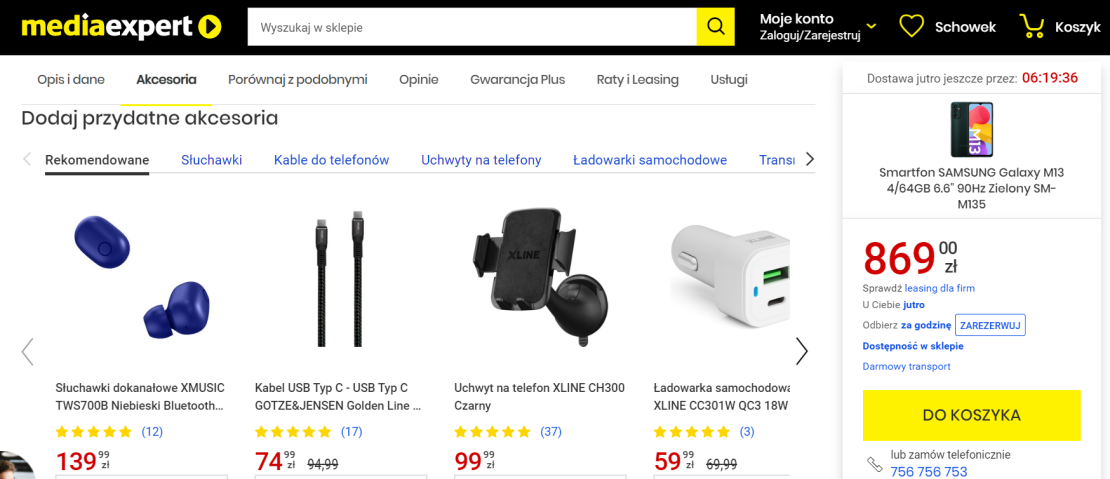
The whole point of the game is for the base product chosen by the customer to be an open invitation to take advantage of an additional offer. A hamburger might come with fries or a drink, shoes might come with special suede cleaning wipes, and in the case of a computer, the seller might also offer a mouse. Anything goes.
Are you ordering cream? Maybe an elegant mug to go with it?
Upselling can be based on communication with the seller or leverage recommendation engines. Examples of cross-selling in e-commerce include sections like "Others Also Viewed," "Our Customers Liked These Products," "Complete a Look," or "Popular." Recommendations based on social proof have a greater chance of success. We discussed this in our article Increasing Your E-Commerce Conversion Rate.
Then – ideally – in one transaction, the customer will purchase additional products that you offer (this principle works in both online and stationary stores).
Recommendation engines – how do they work?
The previously described cross-selling recommendations are based on machine learning and advanced algorithms. These algorithms, through live analysis, present customers with suggestions that best meet their expectations, aesthetic sense, and needs. An example?
If you're interested in a floral dress, the algorithm will suggest a few accessories that will perfectly complement your outfit. Alternatively, you can count on the help of a stylist who will virtually whisper in your ear that people who were interested in the floral dress also viewed these two other products...
Below is an example of how the Ikea brand does it:

Good to know…
Research shows that acquiring a new customer is five times more expensive for a company than selling additional products to someone who already trusts the brand. In short, it's worth it.
Cross-marketing strategies presented in this way are unobtrusive. If they align with customer preferences, they may appreciate the time savings and support provided by the brand, which will positively impact their loyalty.
Upselling – i.e. offering higher quality
Cross-selling and upselling techniques are often used simultaneously. To understand the differences between them, remember that cross-selling refers to recommending additional products beyond those already added to the customer's cart. Upselling, on the other hand, simply means offering the customer "higher-end" products or services.
A higher-quality offer can persuade a potential customer to purchase (a product or service) at a higher price. This increases the order value with relatively little effort. Furthermore, before the transaction is finalized, we can offer the customer a cross and an additional product. Checkmate in a sales-oriented manner.
Upselling in online stores
Offering customers better-performing products seems relatively simple in direct sales. What about upselling products in an online store ? Fortunately, it's comparable. Perhaps even easier.
Cross-selling and upselling can be based on social proof. Upselling recommendations will simply suggest a product that is more exclusive, more expensive, or technically more advanced than the one the customer is currently viewing. The effectiveness of the offer will depend on several factors, including price. A well-executed upselling strategy is one that focuses on a product from a higher category, yet still similar to the product the customer is viewing.
Important in upselling
While the cross-selling strategy is safe – the customer has already decided on a given product, and we merely propose additional, complementary solutions, the up-selling technique requires sensitivity and delicacy. Here, selling a higher quality product (and at a higher price) is a labor of love.
The purchasing decision hasn't been made yet, and a customer who feels too much pressure might simply give up and not buy from us at all. When offering a different product or service, be attentive to verbal and nonverbal reactions. Try to put yourself in their shoes and respond flexibly to their messages.
A customer can't feel pressured, even for a second, to sell something, because it will backfire. If we lose their trust for a moment, it's hard to regain it. Many people stereotypically believe that a salesperson simply wants to sell them something, not help them. But the truth is, a good purchase can be a double win for the customer. Take, for example, a digital marketing agency that offers SEO services . By choosing this service, the customer pays, but they earn money. If we have a training company that provides consulting and projects, it also benefits the customer and their business. If they earn money or make their work easier, they will achieve positive results. We will gain their satisfaction and recommendation," explains Dawid Didiuk.
Upselling – Purchase Transaction Example
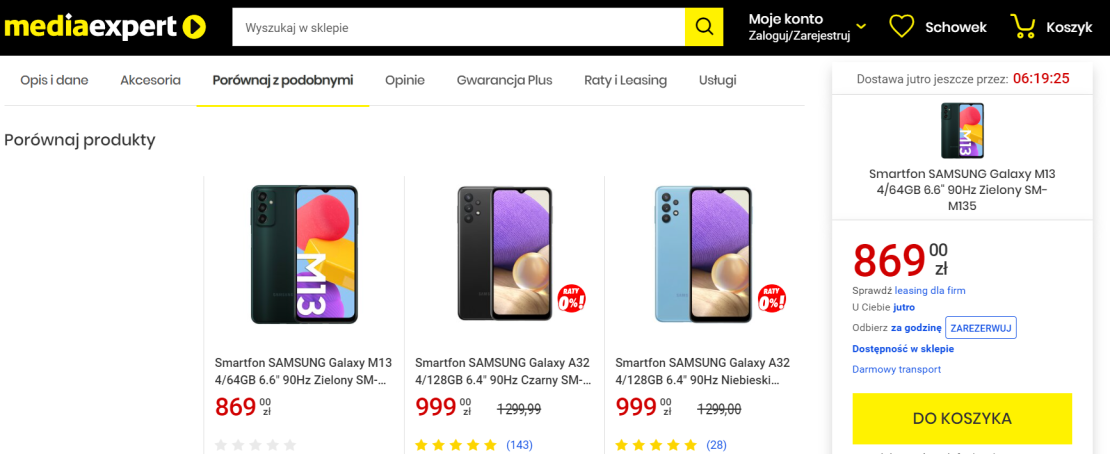
Let's assume a user is browsing a mobile phone listing. Let's set their skill level to 4 and the price to 870 PLN. Using upselling, we'll offer the customer a phone rated 5 at a maximum price of 999 PLN.
Our average income after several such transactions increases significantly (per month), while the difference in the price of the product for the user is not so drastic that he or she cannot afford it.
Recommendation engines base their operations on algorithms that select products (or services) to maximize the effectiveness of the offer dedicated to the user. Then, a question about cross-selling occurs, an additional product is added to the cart, and… the transaction is completed successfully.
Cross selling and up selling – summary
Offering customers complementary products or services and suggesting higher-quality solutions can directly translate into increased shopping cart value and… your profit. This increases your chances of improving sales results with minimal effort.
In cross-selling, in the worst-case scenario, a customer might simply choose not to purchase the additional products you recommend. You lose nothing. In the case of up-selling, ineffective use of this technique can result in a failed negotiation and, consequently, an incomplete purchase. Act with sensitivity and always try to put yourself in the customer's shoes.
If you're developing an e-commerce business , rely on machine learning and algorithms to perfectly tailor your offerings to user expectations and preferences. And you'll enjoy the results and profits.
Summary
The above article covers the following topics:
- Use cross-selling and up-selling techniques to effectively increase profits and conversions in your business.
- Cross-selling involves offering complementary products to the customer in order to maximize the profit from the transaction by accurately identifying their needs.
- Effective cross-selling requires recognizing the customer's dominant need – security, convenience, prestige or profit – and tailoring the sales argument to it.
- Effective cross-selling and up-selling are based on tailoring arguments to customer needs and offering complementary products that actually increase the value of the basket without the risk of losing the main transaction.
- Cross-selling involves offering complementary products to the base order, which in e-commerce and stationary sales is achieved through tailored proposals such as "select accessories" or recommendations based on the choices of other customers.
- Using machine learning technology for unobtrusive upselling and cross-selling allows you to increase the value of your shopping cart at a low cost of customer acquisition, provided that the offers are precisely tailored to your needs.