Running a business in the third decade of the 21st century, it's virtually impossible to avoid an online presence. Almost every customer – whether current or potential – is an internet user in some way, so they may encounter a business during their online activity. There are many forms of online advertising – a very broad term that can refer to numerous channels of communication with customers. One of these, often providing the best cost-to-benefit ratio, is website positioning (SEO), which involves activities aimed at improving a website's visibility in search results while ensuring increased traffic. Some entrepreneurs attempt SEO on their own, usually with moderate results (though there are exceptions). However, most businesses, at some stage of development, decide to work with a professional agency. How much does website positioning cost? Can you effectively position a website yourself?
You can read about specific case studies regarding the positioning of online stores on the Shoper platform in a separate post on our blog:
What is positioning?
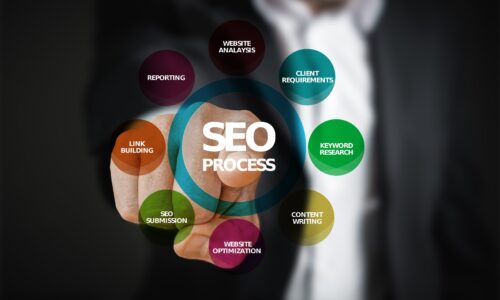
As mentioned above, SEO is a process that, when done correctly, attracts more users who type specific phrases into search engines. In short, SEO activities are divided into two types – both are essential to properly positioning a website in search engines and ensuring high rankings:
- On-site SEO – activities we perform at the level of our own website. These primarily include:
- publication of well-tailored content containing carefully selected keywords;
- presenting content in a search engine-friendly form – using appropriate headings, taking care of the text structure and division into paragraphs, image descriptions (alt);
- ensuring fast website operation – selection of server, CMS system, code optimization, image compression;
- internal linking – simplifies user navigation, but also affects better page indexing;
- equipping the website with an SSL certificate;
- setting friendly addresses (e.g. sklep.pl/okiennice instead of sklep.pl/kategoria/2137/21-04-2021-okiennice/9451431#);
- responsiveness – the website must display correctly on various devices – not only computers, but also smartphones and tablets.
The first step in SEO, however, is always keyword selection. The analysis should be detailed and based on reliable data. It's important to consider what phrases users might be typing when searching for products or other content on your website. A good start is to analyze competitive websites—what keywords they rank for and what their SEO strength is. The market offers a wide range of programs and services for examining various aspects of keyword selection—from free ones like Google Trends to paid ones like Ahrefs or Semstorm. We'll discuss SEO tools further in this article.
(The rest of the article can be found below the form)
- Off-site SEO – activities involving obtaining as many valuable links as possible leading to a given website.
Link building is a key element of website SEO . As a website gains popularity, it often acquires links naturally – users share content they find valuable by linking to it on their own websites or blogs. In the vast majority of cases, however, this won't be enough to secure high rankings in search results, especially if the industry is highly competitive and there are many candidates for a share of the online pie.
Services that allow you to buy links from various websites come in handy. These can take various forms – you can purchase a hyperlink in an existing article with a similar topic to your website. You can also purchase space and publish your own sponsored article on a given website, giving you full control over the keywords and text format. Some services also allow you to purchase copywriting services, which involve writing such an article yourself, eliminating the need to generate the text yourself.
The key in this case is the quality of the website from which we want to obtain a link – the quality is calculated by the Google algorithm and depends on the SEO level of a given website.
Another option is to build a network of custom pages designed to improve the SEO of your main website. These pages, called backends, are populated with keywords and links, which allows the optimized landing page to boost its results. Building an effective backend, however, requires significant know-how. These projects typically require valuable domains with a rich history, and the site itself should feature a wealth of well-curated content. Simply deploying a simple CMS and waiting for results isn't enough – Google's algorithm easily detects pages with low search engine value, so poorly prepared backends will only waste resources and time.
The rule is simple – the more links from websites considered valuable, the greater the value of our website and, consequently, the higher its position.
It's also important to pay attention to the link parameters. Links marked as dofollow are indexed by search engine robots and "invite" crawlers to view the page. Links marked as nofollow are bypassed by bots, making them theoretically seem of little value from an SEO perspective – these are, for example, links on social media. However, link building should consist of both dofollow and nofollow links to maintain a natural link profile – diversifying the profile is called link pillowing.
Link building, however, isn't easy. If a large number of links from different sources suddenly appear to our site, Google's (or another search engine's) algorithm may flag this activity as suspicious, limiting its effectiveness. In the worst-case scenario, the site will be penalized, negatively impacting its SEO results.
Is it possible to position a website for free?
Technically, this is certainly possible, and in an extremely niche industry and with relatively significant effort, quite likely. A well-chosen strategy and on-site and off-site SEO efforts can, in the long run, propel a website to the top of search results. One of the greatest allies here is Google Analytics and the Google Search Console tool – these are free services officially provided by Google. However, installing them can be problematic (depending on the website structure and the CMS used), and improper implementation will lead to distorted results.
When it comes to link acquisition, we can certainly count on a natural flood of hyperlinks – especially if, for example, a company blog post is substantively valuable and solves a common problem or raises an issue that has not been explained so comprehensively before. However, you shouldn't usually expect spectacular results.
We can also ask friends who run websites for help with linking—preferably on topics related to ours. In the vast majority of cases, however, the number and strength of links won't be sufficient to catch up, let alone significantly outperform, the competition. In some cases, free SEO can be successful, especially if we run a website as a hobby and it's about a little-known topic. However, if we're promoting a profit-driven business and the industry is filled with recognizable brands with marketing and SEO budgets, our chances of achieving high rankings are slim.
Why is it worth working with professional SEO specialists?
Primarily because website positioning is a complex process, requiring experience, specialized knowledge, professional tools, resources, and time to produce good results. Many agencies offer a free SEO audit by entering a URL (including Verseo: here ). Such an automated audit can identify the most pressing issues related to indexing and website structure, providing a general overview. While this is a good start, the tool will provide significantly less data than a professional audit performed by an experienced specialist.
Tools supporting link and keyword analysis are paid:
- Ahrefs
- Senuto
- Semstorm
- SurferSEO
- ScreamingFrog
Professional agencies utilize a comprehensive suite of software, allowing them to continuously adjust their SEO strategy and operate based on a large set of data. Verseo utilizes tools for its SEO work, with a monthly cost for a single company (per website to be optimized) exceeding 2000 PLN.
The cost of website positioning
There's no simple answer to this question. The cost of SEO depends on the competitiveness of a given industry, the strength of competing websites, previous SEO efforts, content quality, site structure, and many other factors. However, you can put the entire SEO process into a general framework based on the rates offered by experienced agencies.
Remember: SEO results are impossible to guarantee, and agencies that claim they'll reach TOP 1 or TOP 3 for a popular phrase within a given timeframe are actually just guessing. While an experienced team of reputable specialists will undoubtedly improve SEO results, the ranking of a website depends on so many factors that precise predictions are impossible.
Another problem in this case is the fact that the search engine displays different results to different users. The core SEO value of a website remains the same, but Google, based on a given user's location, browsing history, and online behavior, will likely present them with a slightly different ranking order than their counterparts.
The minimum cost of website positioning in cooperation with an agency
Working with a reputable agency, the monthly cost of website SEO is at least 1000-1500 PLN for small service websites (local small businesses) and micro-online stores in less popular industries. Such a package typically includes around 30-50 monitored keywords and optimization for 10-20 subpages. These values are slightly lower for service companies and higher for e-commerce stores – due to the specific nature of sales, SEO for e-commerce stores is generally more difficult and, therefore, more expensive.
Positioning a service company – cost
A company operating in a local market in a moderately competitive industry and planning to significantly increase the number of leads generated by search engines must expect a slightly higher cost – PLN 1899 (up to 100 phrases and up to 30 pages). Expanding to a regional or – if we're considering a niche industry – nationwide – costs PLN 2700 (up to 170 phrases and up to 60 subpages) and PLN 4200 (up to 250 phrases and up to 100 subpages). Of course, there's nothing stopping you from committing even more, based on a personalized quote.
The cost of positioning an online store
A small online store in a relatively niche industry, offering a small number of products, should budget at least PLN 2000-3500 for SEO . This package will cover monitoring of 100-250 keywords and 30 to 100 optimized subpages. Medium-sized and large e-commerce sites with a larger product range can consider higher packages – from PLN 5000 to PLN 8000 (Verseo offers up to 250 keywords and 100 subpages, or up to 400 keywords and 150 subpages, respectively). The largest platforms in the most crowded market sectors are subject to individual pricing – the sky is the limit, both in terms of costs and investment returns.
The cost of website SEO may seem high, especially for micro-businesses, but traffic coming directly from search engines (organic traffic) is very valuable in terms of customer acquisition. Users come to the site looking for specific products, services, or information, which means they usually don't land there by accident, significantly increasing the chance of conversion.
We repeat it often, but this quote will likely never become outdated: SEO is a race of sorts. It's certainly closer to a marathon (or even an ultramarathon) than a sprint, and a good result requires know-how, effort, and, above all, time.
For more details, please visit the e-commerce SEO price list and the SEO price list for services on the Verseo website.
Frequently asked questions about SEO costs
The monthly SEO cost consists of three main pillars: specialized knowledge and expert time (technical optimization and analytics), creating quality content (copywriting), and building a link profile (link building). Another important, though often invisible, cost for the agency is maintaining advanced analytical tools, which often cost thousands of zlotys per month.
The main variables influencing valuation are the industry and its level of competitiveness, the company's reach (local, regional, national/international), and the type of website itself. The more challenging the industry and the broader the target market, the larger the media budget required to acquire strong links and intensively develop content.
Due to their scale and specificity, online stores typically consist of hundreds or thousands of subpages (categories, filters, thousands of product pages) that require separate optimization, unique descriptions, and monitoring. Furthermore, online sales are an area of very aggressive competition, which naturally requires the involvement of larger resources.
Unfortunately, no. Extremely low rates mean drastic cuts in quality—massively adding worthless links from the backend and generating poor-quality text. These actions can be counterproductive, resulting in Google imposing a filter and a drastic drop in the site's visibility.
The costs of a single link (link building) vary greatly. Publishing a link on a smaller website with average authority typically costs several dozen or several hundred zlotys. Meanwhile, posts on powerful, opinion-forming portals and large websites with a vast reach can cost as much as 5 to 6 zlotys per post.
Summary
The above article covers the following topics:
- website positioning mechanisms,
- the possibility of free website positioning and the role of your own SEO activities,
- reasons why it is worth cooperating with professional SEO specialists,
- factors influencing the cost of website positioning,
- SEO valuation for service companies and online stores.