Contents
You are now reading:
Case study – how to increase sales in the photography industry (Google Ads, Facebook Ads)?
Close
How can we effectively increase online sales? Our answer to this question is most often: by combining various advertising channels. Diversification not only allows us to reach different audiences, but also eliminates our dependence on a single medium, which, in the event of a failure or other unexpected situation, suddenly cuts us off from the source of most purchases. One of the most popular combinations for online campaigns is the Google Ads and Facebook Ads duo , which offers the greatest reach and the most opportunities for targeting. Below, we present the results that can be achieved with this approach in the photography industry.
Google Ads
Our client has been in business for almost twenty years, selling cameras and photographic accessories to both amateurs and professionals. They offer high-quality equipment and lab services, providing their clients with comprehensive service. We provide equally comprehensive Google Ads advertising for this client: we run text, product, video (on YouTube), and display campaigns, including remarketing. We've already developed a deep understanding of their audience, so we can focus on optimizing their campaigns, achieving increasingly higher conversions within their budget. Let's take a look at how the combined results of all these campaigns changed over the course of several months – from March to June of this year.
Clicks and conversions
Testing and optimization efforts on the client's account led to a significant change in click activity. At the turn of February and March, the ads were generating approximately 11 click activity per month, and in May and June, the number was just over 15 clicks per month, representing a 39,9% increase.
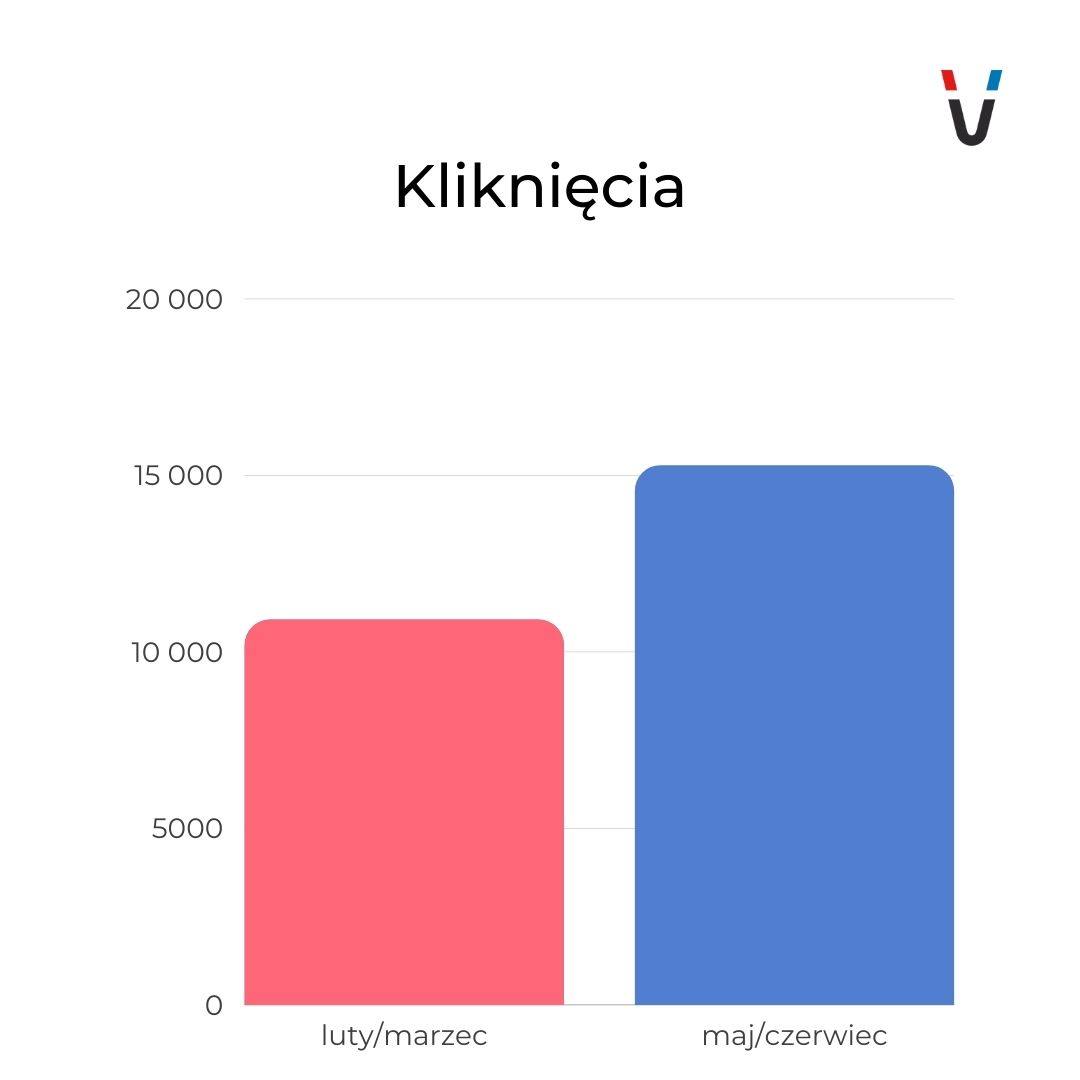
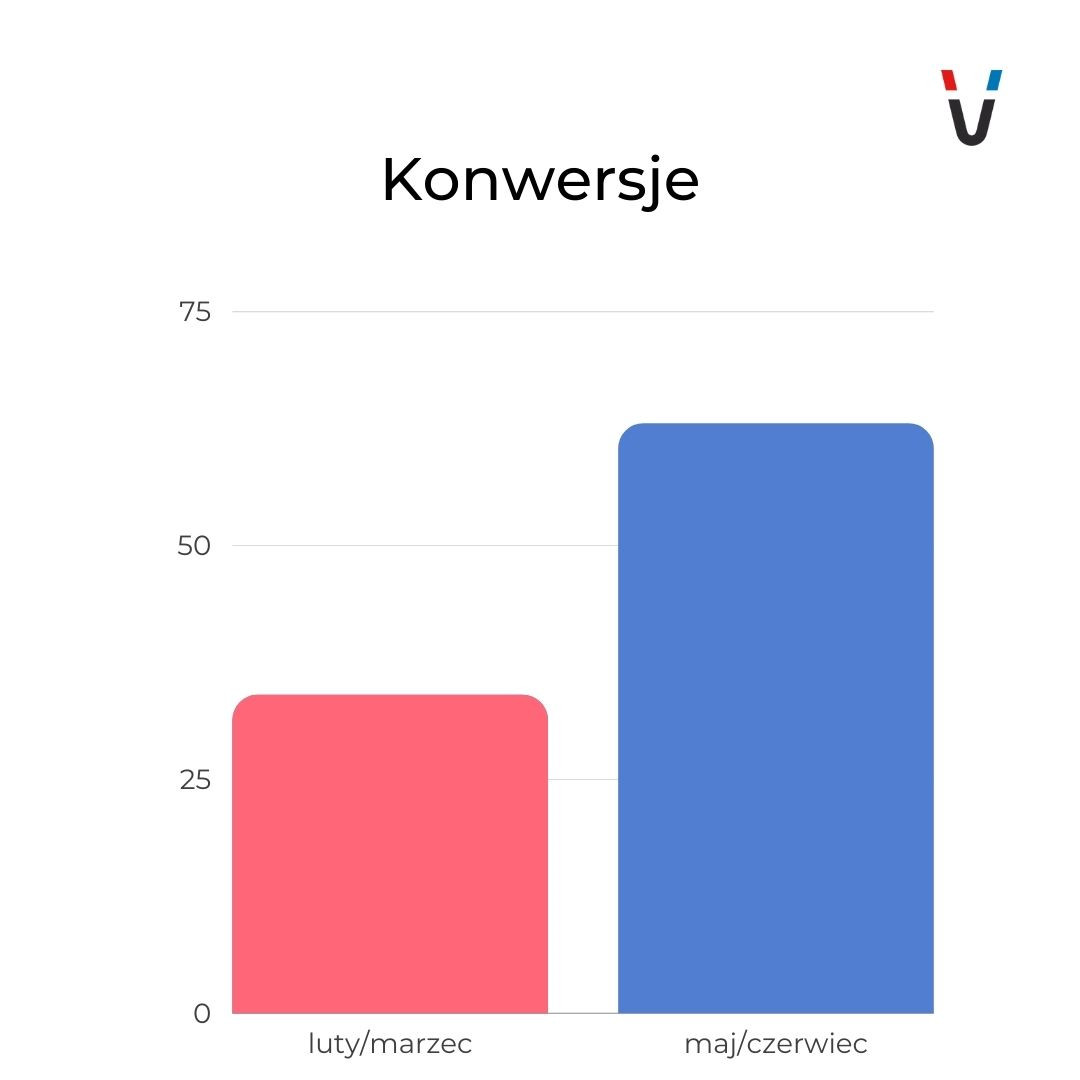
This metric isn't the most important in advertising statistics, however – clicks themselves increase website traffic, but they don't necessarily lead to the ultimate goal of a purchase. Furthermore, a high number of clicks with a low number of transactions can indicate a poorly targeted audience or a vague advertising message. In this case, however, it's clear that both the audience and the message were well-targeted. This is clearly evident in how the number of conversions changed over the period in question – it increased by 85%. The cost of acquiring them changed very little, by just over 5%.
(The rest of the article can be found below the form)
Fill out the form and schedule a call with an expert
We'll get to know your business and prepare a personalized quote for the optimal marketing mix. Completely free.
The controller of your personal data is Verseo, a limited liability company with its registered office in Poznań, at ul. Węglowa 1/3.
About Verseo
The Company's registered office is located in Poznań. The Company is entered in the Register of Entrepreneurs maintained by the District Court for Poznań – Nowe Miasto and Wilda in Poznań, 8th Commercial Division of the National Court Register, under KRS number: 0000910174, Tax Identification Number (NIP): 7773257986. You can contact us by mail at the address provided above or by email at: ochronadanych@verseo.pl
You have the right to:
- access to your data,
- rectification of your data,
- request deletion of data,
- processing restrictions,
- object to the processing of personal data,
- transfer of personal data,
- withdrawal of consent.
If you believe that we are processing your data contrary to legal requirements, you have the right to lodge a complaint with the supervisory authority – the President of the Personal Data Protection Office.
We process your data for the purpose of:
- handling your inquiry, pursuant to Article 6(1)(b) of the General Data Protection Regulation (GDPR);
- marketing purposes consisting in the promotion of our goods and services and ourselves in connection with the consent you have granted, pursuant to Article 6(1)(a) of the GDPR;
- securing or pursuing possible claims in connection with our legitimate interest, pursuant to Article 6(1)(f) of the GDPR.
Providing your data is voluntary . However, without it, you will not be able to send us a message, and we will not be able to respond to you.
We may transfer your data to trusted recipients:
- providers of tools for: website traffic analysis, sending marketing information.
- entities responsible for hosting (storing) the website and personal data.
We will process your data for the period of:
- necessary to achieve the specific purpose for which they were collected, and after its expiry for the period necessary to secure or pursue any claims
- in the case of data processing based on consent until its withdrawal. Withdrawal of consent does not affect the lawfulness of processing prior to withdrawal.
We do not process personal data in a way that would involve making solely automated decisions about you. More information regarding the processing of personal data can be found in our Privacy Policy.

Campaign profits
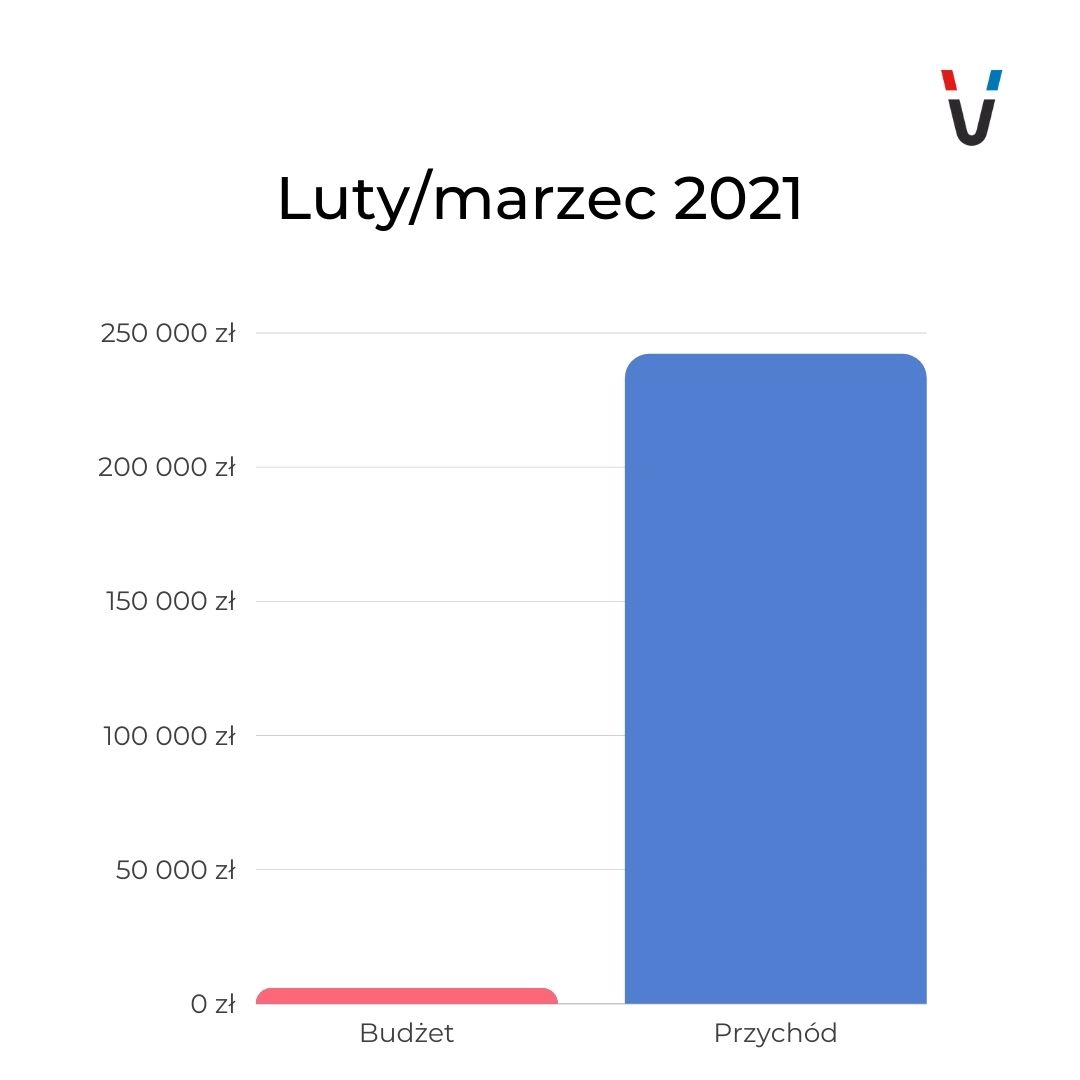
The good results achieved in the campaigns led the client to decide to allocate more funds to Google Ads – within three months, the budget almost doubled (by 94,07%). In February/March, we spent approximately 8,000 PLN on Google ads, and by the turn of May and June, it had reached over 15,000 PLN. The client's willingness to invest allowed us to conduct even more testing, which led to even more satisfactory results. Revenue increased from 114,374 PLN to 560,431 PLN, an increase of almost 390%. In other words, increasing the budget by approximately 7,500 PLN resulted in an increase of over 446,000 PLN.


Google Ads' return on investment increased from 1416% to 3575%. What does this mean? Simply put, at the turn of February and March, every złoty spent generated approximately 14 złoty in revenue, while just three months later, it generated almost 36 złoty.

Facebook Ads
Results from Facebook ads show even greater progress. However, it's important to note that the default data attribution settings allow the system to also count indirect purchases in the statistics. What exactly does this mean? When counting conversions, it considers the attribution model for 7 days after the ad click and 1 day after it was displayed. This also allows for attribution for conversions that occurred on other channels, and for which Facebook wasn't necessarily the last channel in the purchase path.
This is justified, because Facebook is a channel that does not respond with ads to the directly expressed purchasing intention in the search engine, but selects ads to best suit the user's preferences.
Clicks and conversions
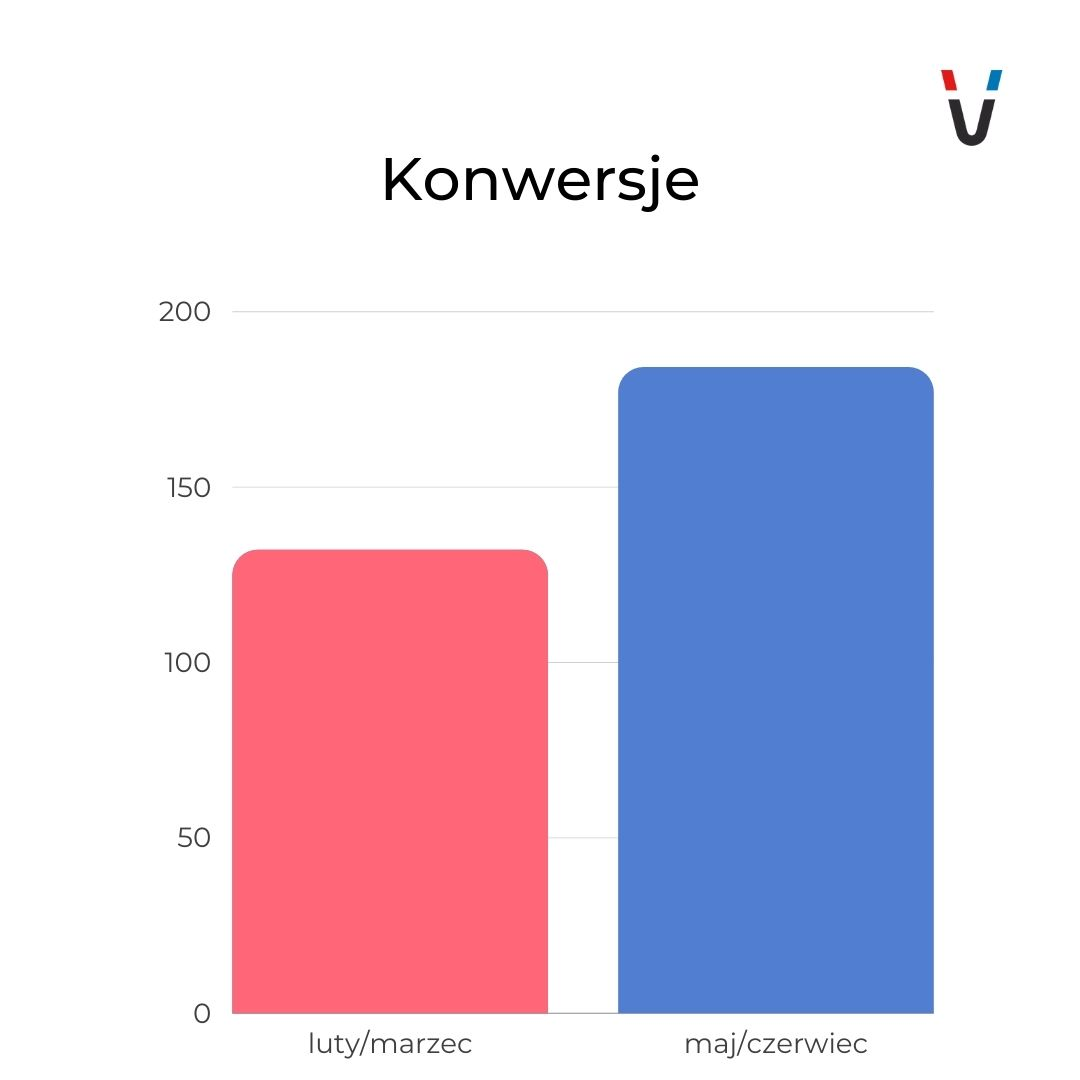
The number of clicks on Facebook Ads didn't change as dramatically as for Google campaigns – it increased from 7803 to 8709, or about 11,6%. However, as mentioned, clicks don't directly translate to profits, and the most important statistics are the number and cost of conversions. The increase in the number of conversions is more pronounced – from 132 to 184, or 39,4%, in three months. The cost per conversion remained very similar – the fee for acquiring one customer decreased by 1,51 PLN, a decrease of about 3,5%.

Campaign profits
We increased the budget for the Facebook Ads campaign by 34,6%, or approximately PLN 2000. Revenue generated through this channel increased by PLN 685,573, which, given the budget, represents a 283,4% increase. The ROAS, or return on investment, for this campaign from May 16 to June 15, 2021, was 11981%, which is a very good result for this type of campaign, even when indirect purchases are included.

Summary
The above article covers the following topics:
- Google Ads campaign results, increase in clicks and conversions, and the impact of increasing the budget on revenue and ROAS.
- Facebook Ads campaign as a channel supporting client sales in the photography industry.