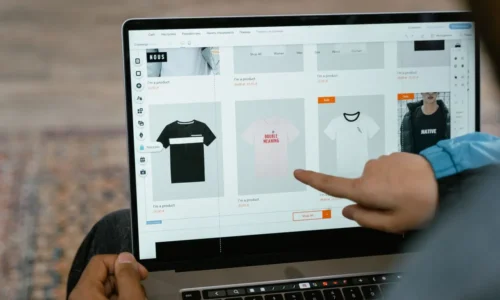
Can you imagine putting items into a shopping cart in a brick-and-mortar store, then leaving it in the middle of the store and walking out? Such situations, if any, rarely occur. It's a different story in the world of e-commerce. Gathering a large collection of products in a virtual shopping cart is simple, quick, and enjoyable. And leaving it without finalizing your purchase is just as easy, as you don't face the surprised looks of other customers or the seller themselves.
What are abandoned carts in an online store?
Abandoned shopping carts are a problem for every e-commerce business. As mentioned above, a customer adds a product to their cart and then, for some reason, doesn't complete the purchase process. Various studies indicate that in 2022, the global abandonment rate ranged between 59,2% and 79,8% , generating losses of up to $4,6 trillion . It's no wonder, then, that online store owners, after facing these statistics, are taking steps to address and prevent the problem of abandoned shopping carts.
In this article:
- we will analyze the reasons why users do not complete their purchases in online stores,
- we will present methods for saving abandoned shopping carts,
- we will show what actions need to be taken to prevent this phenomenon in the future.
What purchases do customers abandon?
Raise your hand if you haven't abandoned your shopping cart at least once in an online store! I don't think it'll be a surprise – few people can boast such a record. However, what is surprising are the industries with the highest bounce rates.
(The rest of the article can be found below the form)
According to results provided by Statista, cruise ship websites top the list , with a whopping 98% of carts abandoned. Keeping in the holiday spirit, airlines rank equally high, with a 90% abandonment rate. Closely followed by the luxury goods industry (nearly 88% of carts abandoned) and the automotive industry, with a rate of around 86%.
It would seem, therefore, that the main reason for abandoning shopping carts is the dreamers within us who eagerly check the prices of trips or that coveted car out of curiosity – or the desire to plan savings!
But let's get down to earth and quickly take a look at the data for the part of the market we deal with every day and which is probably the first thing that comes to mind when we think of abandoned shopping carts.
Fashion accounts for approximately 88%, children's accessories for 85%, cosmetics for 70%, and grocery shopping for 50%. In these sectors, the basket value is significantly lower than in the travel and car segments mentioned above. So what causes consumers to abandon their baskets so often?
Reasons for cart abandonment
There's a lot of talk in the e-commerce industry about nurturing customer reviews . While it's not easy to obtain, believe me, it's worth it. This is because a staggering 92% of consumers abandon purchases due to negative reviews from other users. The second reason is the lack of a good and easy-to-use returns policy – a point highlighted by a staggering 80% of respondents.
The store's website itself and the user experience are also important. Too slow to load? 75% of potential customers will abandon their shopping carts. Hidden costs are a reason for abandoning online shopping for 55% of us, followed by the need for registration, an overly complicated ordering process, and site security issues.
These data aren't encouraging, but with this knowledge, store owners can begin working to improve their situation. There's no doubt that abandoned carts should be taken very seriously. Consumers have completed almost the entire shopping journey, yet they back out at the last minute. Locating the source of the problem within a specific store is therefore crucial to developing a recovery plan.
How to recapture consumer attention?
When approaching the problem of abandoned carts, you need to think in two ways:
- How can I win back customers who wanted to make a purchase from my store?
- What actions do I need to take to reduce cart abandonment rates?
First, we'll focus on those consumers who have already explored our store and added products to their carts. Something must have caught their attention, and there's a chance they'll regain it.
Action here and now, i.e. a pop-up on the store website
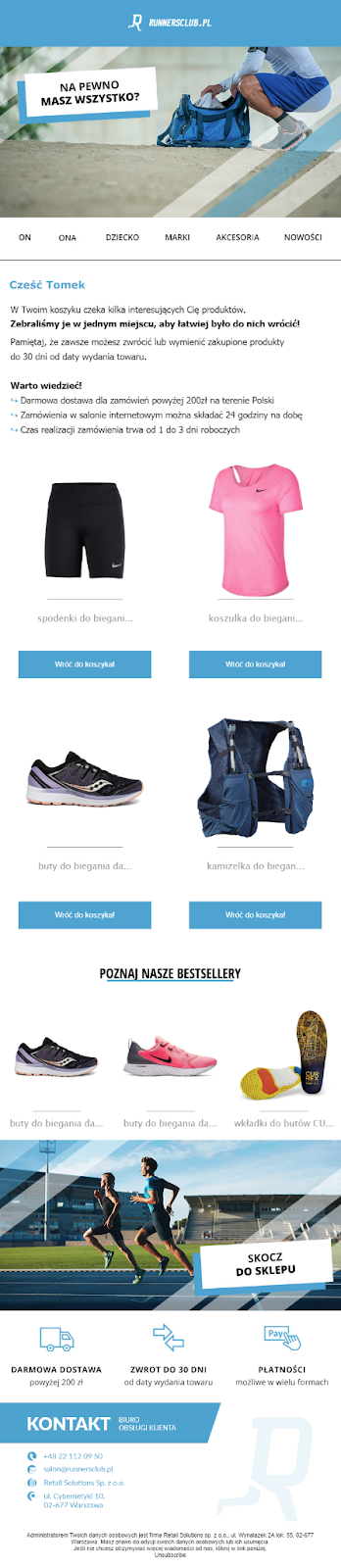
You can try to stop a customer who, after exploring the store and adding products to their cart, wants to close the page. Often, we have multiple tabs open and forget we were planning to make a purchase. A gentle reminder and a visual display of what products are waiting in the cart to be completed can encourage the customer to make a purchase.

Abandoned cart reminder messages
To recover abandoned carts , it's worth sending a customer an email, and it's best to do it quickly! Especially if you run a store in a highly competitive industry—clothing, footwear, or cosmetics. Don't wait a few days; remind them within a few hours, while the customer still remembers the products they were interested in.
The message should have a catchy title, a short message emphasizing the benefits, and a clear call to action . And don't be afraid to remind customers about abandoned carts several times, spaced no longer than three days apart. In addition to emails, you can also consider running an SMS campaign. Statistically, SMS messages have an open rate of 98% and are read within 5 minutes (SMSAPI data).
Offering a discount can be an added advantage, but this strategy requires careful consideration of the situations in which you want to offer it. If you do this too often, you risk customers deliberately abandoning their carts and waiting for a lower price.
Considering how many customers abandon their shopping carts, it's obvious that you won't be able to send each email individually. Therefore, it's worth leveraging the power of a CRM and Marketing Automation system , where you can create a message template in just a few steps.
Emails are not everything, you need to implement remarketing
Not all customers you send abandoned cart notifications to will check and open the email. In such cases, you can plan remarketing. Remind them of your products by displaying them in ads on social media or other websites the customer visits. However, consider the frequency carefully, as too many of these ads can only discourage the customer from your brand.
An example of a remarketing ad displayed on social media
What can you do to prevent customers from abandoning their carts?
Once your Marketing Automation machine is up and running and retrieving abandoned carts, you can develop a plan to prevent such situations in the future. You need to accept that you'll never be able to completely eliminate this problem, but even a few percent improvement can be an additional boost for your e-commerce business.
The problems to be fixed will be different in each store, but based on the causes of cart abandonment, we can distinguish the main areas requiring improvement:
- UX —from page clarity, loading speed, and easy shopping paths to product searches. Make sure your store page displays correctly on mobile devices, as they generate the most traffic and have very low conversion rates.
- Delivery times, costs and methods — the less attractive they are, the less likely they are to complete the transaction. Consider offering free shipping once the shopping cart exceeds a certain value.
- Store credibility — terms and conditions, privacy policy, social media. Users pay attention to such details when placing an order. If any of these elements are missing, the transaction may not be completed.
- Customer reviews — an activity that goes beyond the store itself, but undoubtedly impacts its image. To gather feedback, you can use activities that provide customers with additional benefits—discounts, free shipping, something free.
- Payment methods and transaction security. First, try to offer as many payment methods as possible—from traditional bank transfers to cash on delivery (COD) or BLIK. You can use the latter to shorten the ordering process and place the payment option on the product page.
- No need to register or create an account. This is something that irritates many customers, especially if they are close to finalizing the transaction in the purchasing process.
- Site security — Our awareness of online caution is very high. Make sure your website is properly secured and certified.
- Adding important information to the product card. A potential customer may be encouraged to complete a purchase once they know about shipping costs, payment methods, shipping method and delivery time on the product page.
Summary
The challenge of abandoned shopping carts in e-commerce is a constant in the industry. However, finding solutions to reduce this rate and seeing the results they bring is incredibly rewarding for any online store owner. Identify the reasons why customers abandon their purchases and develop an action plan that will boost your sales figures. Good luck!
Summary
The above article covers the following topics:
- When does an abandoned cart occur?
- What products are most often abandoned by consumers?
- What are the causes of shopping cart abandonment?
- How can I recover an abandoned cart?
- How to prevent cart abandonment in an online store?
Also read… Increasing your e-commerce conversion rate
About the author:
Marta Jablonska
Senior Content Designer
A journalist and communications specialist by training, she has consistently built her career on working with words. She began her career in public relations, writing dozens of press materials for agencies such as Team Lewis and Grayling. For several years, she has been developing her marketing skills, creating all kinds of content – from SMS campaigns and newsletters to in-depth expert articles. At Edrone, as a Senior Content Designer, she uses her creative writing to share her knowledge with online store owners, showcasing new trends and potential directions for e-commerce development.